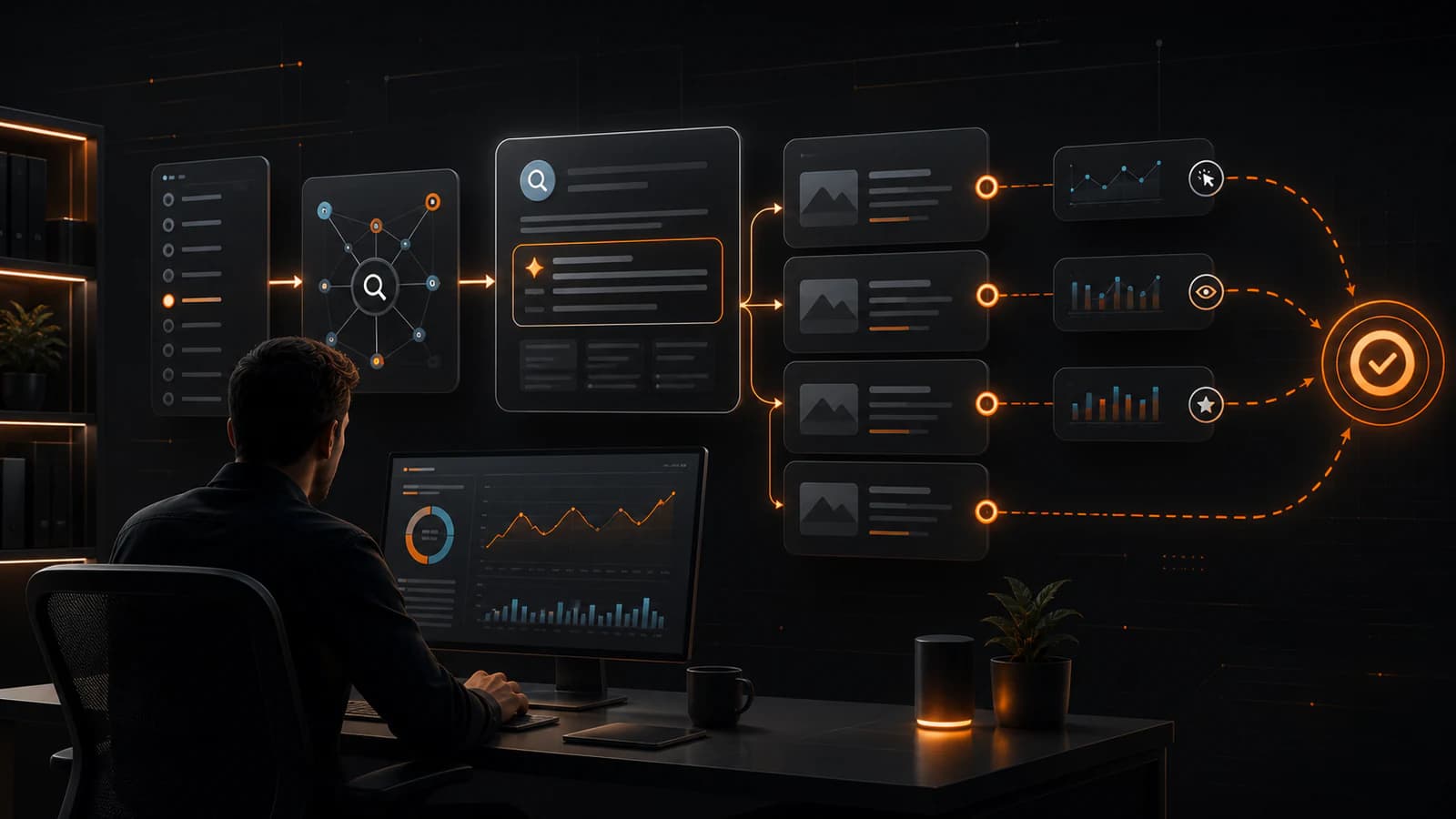
How ChatGPT Recommends Service Businesses in 2026
ChatGPT now recommends local service businesses to millions of users daily. Discover the signals that determine which businesses get cited and which get ignored.
407+ field-tested strategies for dominating AI search results.
ChatGPT now recommends local service businesses to millions of users daily. Discover the signals that determine which businesses get cited and which get ignored.
Homeowners are asking AI assistants to recommend licensed electricians before they ever call 411. Discover what it takes for your electrical business to win AI citations.
SEO agencies optimize for Google rankings. AEO agencies optimize for AI citations. In 2026, the difference determines whether your phone rings or goes silent.
ChatGPT now recommends local service businesses to millions of users daily. Discover the signals that determine which businesses get cited and which get ignored.
Homeowners are asking AI assistants to recommend licensed electricians before they ever call 411. Discover what it takes for your electrical business to win AI citations.
SEO agencies optimize for Google rankings. AEO agencies optimize for AI citations. In 2026, the difference determines whether your phone rings or goes silent.
When homeowners ask AI which roofing contractor to call after a storm, will your company be the answer? Discover what drives AI citations for roofing businesses.
Not every AEO agency serves small businesses well. Learn what separates agencies that deliver AI visibility from those that just invoice and disappear.
Plastic surgery patients now ask AI before asking Google. Here is what determines whether ChatGPT, Perplexity, and Gemini recommend your practice or send patients to a competitor.
When someone gets a DUI, they ask AI before calling anyone. Here is what determines whether ChatGPT and Perplexity name your firm or send that call to a competitor.
Car buyers research vehicles on ChatGPT and Perplexity before visiting any dealership. Here is what determines whether AI recommends your lot or sends buyers to a competitor down the road.
When businesses ask ChatGPT or Perplexity which marketing agency to hire, AI names specific firms. Here is what determines whether your agency appears in those answers.
Your franchise agreement protects your territory in the contract. It does not protect you on ChatGPT. Here is what determines whether AI recommends your location or sends customers to a competitor.
A family settling an estate does not start by searching for a real estate agent. They ask an AI assistant how to sell a parent’s house in probate, whether the home can be sold before the case closes, and how long the court process takes. Answer Engine Optimization (AEO) for probate real estate specialists engineers your content so ChatGPT, Perplexity, Claude, and Gemini retrieve and cite you inside those procedural answers - months before a competitor surfaces. What probate AEO is, how AI picks the specialist it recommends, what the research proves wins citations, the five-move playbook, and the Probate Citation Ledger that makes an invisible channel countable.
Insurance agents are losing leads to AI search without knowing it. Learn what signals ChatGPT and Perplexity use to recommend agents and how to position your practice at the top.
Landscaping companies that show up in AI search results are winning more calls than competitors who rely on old SEO tactics. Learn how AI decides which landscapers to recommend.
Your customer reviews contain the exact language AI uses to recommend businesses. Learn how to unlock that signal and turn reviews into a citation engine that works 24/7.
Not all schema markup is equal. Discover which schema types AI crawlers actually parse when deciding which local businesses to recommend, and which ones they ignore completely.
Most business owners assume Google reviews automatically boost AI search visibility. The reality is more nuanced. Here is what the data actually shows about reviews and AI citations.

A 2026 ranking of which AI engines send the most traffic to websites, separating raw reach from referral clicks across Google AI Overviews, ChatGPT search, Perplexity, Gemini, and Copilot, grounded in peer-reviewed AEO research.
Commercial real estate search has moved into AI engines. Tenants, investors, and owners now ask ChatGPT, Perplexity, Claude, and Gemini which submarket fits, what a cap rate should be, and who the credible broker is. AEO for commercial real estate agents engineers a brokerage site so those engines retrieve and cite it: definition-first asset-class pages, proprietary comps, bounded chunks, and the Deal-Cycle Ledger that makes the channel countable.
Answer Engine Optimization (AEO) services in 2026: how The Answer Engine gets your business cited by ChatGPT, Perplexity, Claude, and Gemini. What AEO services do, how the engines pick which business to cite, the five-move playbook, and the Proof Ledger that makes the channel countable.
A relocation buyer arrives in your market with no local network. They have never lived there, so they ask an AI assistant who handles people moving from their state to your city - then contact the agents it names. Answer Engine Optimization (AEO) for relocation specialists engineers your profile and content so ChatGPT, Perplexity, Claude, and Gemini retrieve and cite you for those origin-to-destination questions. What relocation AEO is, how AI picks the agent it recommends, what the research proves wins citations, the five-move playbook, and the Relocation Ledger that makes an invisible channel countable.
A first-time buyer rarely starts with a referral. They have never owned property, so they ask an AI assistant how much they need to put down, what an FHA loan is, and who can help them buy in their city - then they contact the agents it cites. Answer Engine Optimization (AEO) for first-time homebuyer specialists engineers your profile and content so the assistant retrieves and cites you for those questions. What first-time-buyer AEO is, how AI picks the agent it recommends, what the research proves wins citations, the five-move playbook, and the Buyer Citation Ledger that makes an invisible channel countable.
How to track AI search citations across ChatGPT, Perplexity, Google AI, and Claude. The AEO method to measure every citation the engines hide.

When clients ask ChatGPT or Perplexity to recommend an accountant, will your firm show up? Here is what AI looks for in financial professionals.

Homeowners are asking AI assistants to recommend plumbers before they ever open Yelp or Google Maps. Here is how plumbing businesses win those citations.

Not all schema markup moves the needle for AI search. Find out which structured data types AI engines actually parse and which ones are wasted effort.

Patients are asking ChatGPT and Perplexity to recommend chiropractors near them. Discover what AI platforms look for before citing a chiropractic practice.
A new-construction buyer rarely starts with a referral. They ask an AI assistant which specialist handles new builds in a community, which builder still has inventory, and who understands a builder contract - then contact the agents it cites. Answer Engine Optimization (AEO) for new construction specialists engineers your profile and content so the assistant retrieves and cites you for those new-build queries. What new-construction AEO is, how AI picks a specialist, what the research proves wins citations, the five-move playbook, and the Build Ledger that makes an invisible channel countable.
Real estate investors no longer start with a referral. They ask an AI assistant who finds off-market deals, which agent understands a 1031 exchange, and which market still cash-flows - then they contact the specialists it cites. Answer Engine Optimization (AEO) for real estate investors is the work of engineering your profile and content so the assistant retrieves and cites you for those deal-flow queries. What investor AEO is, how AI picks a specialist for a buying-intent query, what the research proves wins citations, the five-move playbook, and the Returns Ledger that makes an invisible channel countable.

AI Overviews are Google’s AI-generated answer panels above search results. What they are, how the retrieval-and-synthesis layer picks sources, and the Answer Engine Optimization method to get cited, with the 2026 research behind every step.

SearchGPT grounds every answer against Bing's index and OpenAI's own crawl, then names a short set of cited sources. This guide gives operators the full mechanism: OAI-SearchBot crawl access, Bing indexing, definition-first bounded passages, the schema stack, and the monthly SearchGPT Proof Ledger that turns an invisible channel into a countable one. Grounded in peer-reviewed AEO research.
AI search and Google Ads serve different points in the buyer journey. Learn when AI citations drive phone calls and when paid ads still win.
Being cited by ChatGPT or Perplexity is not vanity. Discover the conversion path from AI mention to booked appointment and closed revenue.
Perplexity Pro is becoming a top referral source for local services. Find out what signals drive business recommendations on this fast-growing AI platform.
AI search levels the playing field in ways Google never did. Discover why small businesses can outrank national chains when AI answers local queries.
Customer reviews are the currency of AI search. Discover how AI platforms use review signals to decide which businesses deserve citations.
A high-net-worth buyer rarely starts with a referral anymore. They ask an AI assistant who to hire to buy a home in a specific enclave - privately, before any human conversation - and contact the agents it cites. Answer Engine Optimization (AEO) for luxury real estate is the work of engineering your profile and content so the assistant cites you for those high-end buyer queries. What luxury AEO actually is, how AI picks an agent for a seven-figure query, what the research proves wins citations, the five-move playbook, and the Discretion Ledger that makes an invisible channel countable.
Real estate content marketing for AI citations is a different discipline than the blog-and-backlink SEO most agents still run. AI assistants synthesize one answer and cite a short stack of sources - they do not return ten links a buyer scrolls. Answer Engine Optimization (AEO) is the work of engineering your content so the assistant retrieves and cites it. This is the 2025 playbook: what AI citation content actually is, how the engines choose which real estate content to quote, what the research proves wins citations, the five-move content playbook, and the Citation Ledger that makes an invisible channel countable.

Grok AI search retrieves its cited sources from two pools at once, the live X post graph and the open web, then composes an answer that attributes each claim to a specific page or X post. Getting cited by Grok is two jobs run together: build a real-time presence on X that no other answer engine reads, and structure your web pages so Grok DeepSearch can extract a self-contained passage. The full mechanism, the academic evidence, the X-presence and recency signals that move citations, and the Grok Proof Ledger that makes the channel countable.

ChatGPT does not rank pages, it cites sources. The Answer Engine Optimization (AEO) playbook to get your business found and cited by ChatGPT in 2026.
NAP consistency - keeping your name, address, and phone identical everywhere online - is the single highest-return AI visibility factor a real estate agent controls. Before an AI assistant can rank or recommend you, it must resolve who you are by triangulating those three fields across every surface that mentions you. When they match, the assistant resolves one confident identity it can recommend; when they conflict, it cites an agent it can resolve cleanly instead. How AI resolves an agent identity, what the GEO research proves governs it, the five-move NAP playbook that earns the citation, and the Parity Ledger that makes an invisible factor countable.

Microsoft Copilot Search retrieves its cited sources from the Bing index and composes each answer from three to five numbered footnotes. Ranking in Copilot is two jobs: earn a place in the Bing index, then structure each passage so the answer layer can extract a self-contained quote. Because Copilot and ChatGPT Search read the same Bing index, one correctly engineered page becomes a citation candidate on both engines at once. The full mechanism, the academic evidence, the IndexNow and freshness signals that move citations, and the Copilot Proof Ledger that makes the channel countable.
Real estate reviews are no longer social proof aimed only at human buyers. They are a primary corroboration signal AI assistants read when deciding which agent to recommend. When a buyer asks ChatGPT who the best agent is, the assistant assembles a recommendation from the verifiable signals it can retrieve, and your star rating, review volume, recency, and the actual words inside your reviews are among the strongest. How reviews feed a ChatGPT recommendation, what the GEO research proves governs it, the five-move review AEO playbook that earns the citation, and the Review Citation Ledger that makes an invisible channel countable.
ChatGPT uses a multi-signal reasoning layer before naming any business. Learn what those signals are, why some businesses get cited and others disappear, and what the gap actually looks like.
Patients are asking ChatGPT to find a dentist before they ever open Google. Here is what AI looks for in a dental practice and what separates the ones getting recommended.
Run these five queries right now and you will know in 10 minutes whether ChatGPT, Perplexity, and Google AI can find and recommend your business. No tools needed.
Emergency HVAC searches are the highest-intent queries on AI search platforms. Here is what separates HVAC businesses that get cited from the ones that never appear.
AI search optimization pricing in 2026 ranges from $500 to $5,000 per month. Here is what you get at each tier and the red flags to avoid.

Google Gemini grounds answers in Google’s index, Knowledge Graph, and Business Profile. Learn the AEO method that earns Gemini citations. Run your free scan.
Home buyers are changing where they start the search for an agent. Instead of scrolling a Zillow list of paid placements, a growing share now ask ChatGPT, Perplexity, and Google AI Overviews who to hire and act on the single name the assistant returns. Zillow sells the buyer’s attention to whichever agent pays for the Zip code; AI search hands the buyer one recommendation that reads like a vetted referral. How each channel decides, what the research says governs the AI recommendation, the five-move buyer-side AEO playbook, and the Agent Citation Ledger that makes an invisible channel countable.
When a buyer asks ChatGPT "who is the best real estate agent near me," a large brokerage like Compass surfaces first — not because it serves clients better, but because its brand entity is the most corroborated name on the web. Compass wins the broad query by default; an independent agent wins the narrow query by being the only well-corroborated source for a specific neighborhood, price band, or transaction type. Why ChatGPT names Compass, how the recommendation mechanism actually decides, what the research says governs it, the five-move playbook independent agents use to beat Compass on the queries that convert, and the Agent Citation Ledger that makes the head-to-head countable.
Most local businesses are invisible to ChatGPT, Perplexity, and Google AI. Here are the 8 signals AI checks before recommending a business in your category.
Most business owners assume AI can find them. Most are wrong. Here is how to run a 4-platform AI visibility test and what your results actually mean.
AI cites businesses with active review profiles 75x more often than those without. Here is why reviews are now your most powerful AI search signal.
Your homepage is visited most, but AI almost never cites it. Here is why inner pages win AI citations and how to fix your homepage content.
The honest AI visibility timeline: initial signals at 4-8 weeks, consistent citations at 3-6 months. Here is what accelerates or delays your results.
Optimize for Perplexity in 2026 with the AEO system that earns live-web citations: definition-first chunks, fresh data, cross-surface parity. Run a free scan.
The five-move Answer Engine Optimization playbook that engineers a business into the named Claude recommendation. Why Claude is stricter about corroboration than other engines, and how to win the citation.
How mega agent real estate teams get cited by ChatGPT, Perplexity, and Google AI Overviews: the five-move AEO playbook that wins AI search.
Google Gemini uses a layered entity graph to decide which local businesses to surface in AI answers. Understanding these signals is the first step to being found.
When AI recommends your competitor instead of you, it is not random. It reflects measurable gaps in entity authority, content depth, and structured data that you can close.
AI answers have accelerated zero-click search, and local businesses built on organic traffic are feeling the squeeze. Here is what the shift means and how forward-looking businesses are adapting.
AI systems love FAQ content because it mirrors the way people ask questions. Structuring your FAQ page the right way dramatically increases your chances of being cited in AI answers.
If AI chatbots are not recommending your business, there are five root causes that explain why. The good news: each one is fixable once you know where the gap is.
Perplexity AI crawls the live web for every question, retrieves the most relevant pages, and cites the winners with numbered footnotes. A source is either retrieved into the answer or it is invisible. How Perplexity RAG retrieval selects a source, what the research says governs the citation, the five-move AEO playbook that earns it, and the Citation Ledger that makes the channel countable.
When a buyer or seller asks ChatGPT for an agent, it names one - and it is rarely the one with the most sales. ChatGPT recommends the agent whose business entity it trusts most across the web.

Showing up in Google AI Overviews means Gemini retrieves a passage from your page and cites it in the generative answer above the blue links.
Sellers no longer search "realtor near me" — they ask ChatGPT, Perplexity, and Gemini "who is the best listing agent to sell my house" and the assistant names one agent. Answer Engine Optimization for listing agents is the work of engineering your sale-side record so AI names you when a homeowner decides to sell. What AI search reads before recommending a listing agent, the research that governs the decision, the five-move Listing AEO Playbook, and the Seller Citation Ledger that makes an invisible channel countable.
Home buyers now ask ChatGPT, Perplexity, Google AI Overviews, and Claude for a buyers agent who fits their neighborhood, budget, and loan type — and each platform names one or two agents from a different set of source surfaces. The platform-by-platform breakdown of what every AI engine reads, how it binds buyer intent to a structured profile and names a single agent, and the Proof Ledger that turns an invisible channel into a measurable citation rate.

An AEO citation is an inline source mention a generative AI engine delivers inside its answer. What AEO citations are, how the retrieve-score-cite pipeline produces them, the academic evidence, and the Proof Ledger method for measuring them across ChatGPT, Perplexity, Claude, and Gemini.
The five-move Answer Engine Optimization playbook that engineers a business into the named ChatGPT recommendation.
Buyers no longer type "realtor near me" — they speak full, constraint-laden sentences to ChatGPT, Siri, Alexa+, and Gemini, and the assistant names one agent. Voice search collapses the realtor funnel into a single spoken answer. How buyers phrase those requests, how voice AI parses a spoken sentence into typed constraints and binds it to one named agent, the five-move Voice AEO Playbook that engineers pass-through across every assistant, and the Proof Ledger that makes an invisible voice channel countable.
Alexa+ runs Claude on Amazon Bedrock, queries Realtor.com, Yelp, Zillow Premier Agent, and Square or Calendly, and names a single real estate agent inside a 16-second voice exchange. The recommendation mechanism behind the named-agent voice response — the partner stack, the typed-parameter reasoning layer, the 7-signal agent surfacing score, and the operator playbook agents run to engineer Alexa+ pass-through before competitors lock the metro slot.
Eleven metrics that prove Answer Engine Optimization is working — Citation Share, AERO Composite, Retrieval Depth, Citation Velocity, and the six component scores that ladder into them. The Origin Protocol measurement stack.
AEO software for agencies is not a bigger single-operator tool. It is multi-tenant software that lets one analyst run answer engine optimization across a full book of clients with white-label reporting and portfolio-wide proof. The four capability layers, the academic research behind the signals, and the margin math that decides when to license a paid platform.
How Claude AI selects the real estate agents it recommends on local intent queries — the entity graph, the named-author schema, the hyper-local bounded chunks, and the citation cadence Claude weights above brand spend.
The 8 answer engine optimization best practices that drive AI citations in 2026 — tied directly to RAG retrieval mechanics inside ChatGPT, Perplexity, Claude, and Google AI Overviews. Definition Premium, Chunk Ceiling, Three-Signal Test, Compound Authority Principle, and 90-Day Lag Floor explained with implementation order and AERO composite scoring.
How DeepSeek selects the real estate agents it recommends on local intent queries — the retrieval pipeline, the named-author schema, the hyper-local bounded chunks, and the citation cadence DeepSeek weights above brand spend.

A practitioner ranking of the free AEO audit tools that actually measure AI citation visibility across ChatGPT, Perplexity, Claude, Gemini, and Google AI Overviews — schema validators, chunk-density auditors, and prompt-library runners with zero recurring license cost.
SUBSTRATE is The Answer Engine nine-rule content framework for engineering pages that ChatGPT, Perplexity, Claude, Gemini, and Google AI Overviews cite. The mechanism behind each rule, the academic evidence, and the operator playbook for the AEO production pass.
The 2026 AEO strategy template: seven sections that decide whether ChatGPT, Perplexity, Claude, Gemini, and Google AI Overviews cite a website on customer-intent queries, grounded in peer-reviewed AEO research.

Schema markup for AEO is the JSON-LD vocabulary that declares what a web page is about in a machine-readable contract AI retrievers parse directly. Pages with the layered stack — FAQPage, Article, ProfessionalService, Organization, BreadcrumbList — earn a 2.5x citation lift on ChatGPT, Perplexity, Claude, and Google AI Overviews. The structured layer is the substrate AI systems read before they decide whether to mention a business by name.
A technical operator guide to how Grok cites and recommends real estate agents and teams — the six-signal X-graph stack, the real-time recency override, and the Origin Protocol engineering pass.
Mortgage brokers get found on ChatGPT and AI search by registering on a seven-signal AEO composite — verified NMLS license binding, regulated-finance sameAs chain, weekly rate freshness, borrower-scenario bounded chunks, inline regulatory disclosures, named loan officer bylines, and an FAQ schema layer. Mortgage AEO is structurally different from general local service AEO because ChatGPT, Perplexity, Claude, and Gemini apply an elevated source-verification filter to regulated lending. The Origin Protocol production pass for engineering a brokerage to register across all four major engines simultaneously.
The structural method for optimizing content so ChatGPT cites it on customer-intent queries. Six structural disciplines grounded in peer-reviewed AEO research and TAE production measurement.
A real estate website is invisible to ChatGPT, Perplexity, Claude, and Gemini until eight independent layers register on the retrieval indexes. The eight-layer stack — server-rendered crawl surface, schema entity graph, hyper-local bounded chunks, four-link sameAs chain, co-citation graph, biweekly market data freshness, named-author bylines, and FAQPage schema — is the multiplicative composite the AI ranker reads before any citation is scored. The Origin Protocol production pass for engineering a real estate website to register across all four major engines simultaneously.
AI cannot recommend a real estate agent it cannot recognize as a distinct entity. The five-layer recommendation profile — identity triplet, sameAs profile chain, co-citation graph, schema relationship edges, named authorship trail — is the composite entity record AI builds from scattered signals. The Origin Protocol engineers agent entities against the full stack on ChatGPT, Perplexity, Claude, and Gemini simultaneously.
When three realtors share an identical Google Business Profile score, AI search engines drop GBP as a ranking signal and fall back to a six-signal tie-breaker stack: schema density, named-author trust, third-party co-citation, content freshness, citation velocity, and answer extractability. The realtor who scores highest on the fallback stack wins the single recommendation slot on ChatGPT, Perplexity, Claude, and Gemini. The operator method for engineering the fallback stack across all four major engines simultaneously.
Google AI Overviews are replacing the ten-blue-link surface with a synthesized answer panel and a compressed citation set on a growing share of high-intent real estate queries. The retrieval mechanics behind AI Overview real estate citations, the lead generation inversion against portal traffic, and the operator method for agents who intend to own cited-source slots inside Google AI Overview real estate recommendations through the 2026 search cycle.

Social media does not directly drive AEO citations. The Answer Engine reveals what AI platforms actually use to find businesses. Free Blindspot Scan.
A technical breakdown of the composite ranking score used by ChatGPT, Perplexity, Claude, Gemini, and Google AI Mode to order sources for citation, with the seven structural signals that determine ranking weight.
The 32-item structural checklist a website must clear to be cited by ChatGPT, Perplexity, Claude, Gemini, and Google AI Overviews in 2026. Six structural layers, the academic evidence behind each item, and the executable order. Built for operators who measure AEO results against a fixed Proof Ledger.
Perplexity AI weighs content recency more aggressively than any other major AI search surface. The retrieval-layer mechanics behind Perplexity real estate recommendations, the 14-day refresh cadence that captures the recency premium, and the operator method for agents who intend to own cited-source slots on every neighborhood query their market produces.
The audit framework personal injury firms use to measure citation share on ChatGPT, Perplexity, Claude, and Google AI Overviews. The Citation Share Index, the Blindspot Quotient, the Schema Diagnostic Score, and the 90-day operator method for closing the gap.
A practitioner ranking of the best Answer Engine Optimization tools in 2026, sorted by tool category and tied to the citation mechanics that actually move AI search visibility on ChatGPT, Perplexity, Claude, Gemini, and Google AI Overviews.
Real estate agent schema markup is the structured-data substrate ChatGPT, Perplexity, Claude, Gemini, and Google AI Overviews use to verify your identity before naming you in a recommendation. The five-node AEO schema stack, the entity-graph mechanics, and the operator playbook for agents who intend to own the cited-source slot on every buyer and seller query in their territory.
A practitioner definition of an AEO tool — the four functional categories that matter in 2026, the research behind the structural-signal framework, and how The Answer Engine measures whether an AEO tool is actually working.
The 10-step operator playbook for Answer Engine Optimization in 2026, with the mechanism, the academic evidence, and the executable cadence for getting cited by ChatGPT, Perplexity, Claude, Gemini, and Google AI Overviews.
AEO-sourced real estate leads close at roughly 70 percent within 30 days. Zillow portal leads close at roughly 2.4 percent. The retrieval-layer math, the conversation substrate, and the AEO operator method for realtors who intend to own the cited-source slot in every neighborhood query.
A structural breakdown of real pages cited by ChatGPT, Perplexity, Claude, Gemini, and Google AI Mode — what they share, what makes them extractable, and the Citation Fingerprint operators can replicate.

ChatGPT outputs personal injury lawyer queries in a fixed three-block response skeleton: disclaimer buffer, named-firm block, follow-up prompt. Position one inside the named-firm block captures 47% of follow-up engagement. The AEO signals that decide which firm lands first.
How real estate teams get cited by ChatGPT, Perplexity, Claude, and Google AI Overviews. The Team Citation Surface, the 6 retriever signals, the Lead-Agent Resolution Bias, and the 90-day Team Origin Protocol.
How personal injury firms generate retainer-quality leads from ChatGPT, Perplexity, Claude, Gemini, and Google AI Overviews. The retrieval-layer mechanics, the claimant disclosure substrate, and the AEO operator method for PI firms intent on owning the cited-source slot in every injury query that matters.
Real estate agents capture ChatGPT lead referrals with AEO. The complete playbook for citation-ready bios, listing schema, and the 90-day capture system.
A six-step starter process for an operator to begin LLM SEO without prior generative-engine experience, designed to clear the citation threshold of ChatGPT, Claude, Perplexity, and Gemini.
How personal injury law firms build AEO content that gets cited by ChatGPT, Perplexity, and Google AI Overviews. The Origin Protocol content playbook — claim your market before a competitor does.
The retriever architecture, the 5 scored signals, and the Citation Cascade that decides which 3 to 5 real estate agents ChatGPT names per local query — and which ones stay invisible.
An answer engine is a generative AI system that synthesizes cited answers — ChatGPT, Perplexity, Claude, Gemini, Google AI Overviews. The 2026 AEO definition, the mechanism, and what its rise means for businesses competing for inline citations.
Google AI Overviews now answer the majority of personal injury queries before the blue links. Three to five firms get cited. The rest go uncited. This is the operator playbook for personal injury law firms that intend to own one of those cited-source slots in every injury sub-vertical in their market.
Injured claimants are asking ChatGPT, Perplexity, and Google AI Overviews to name a personal injury lawyer. Schema markup is the signal that decides which firms get cited. The structured data playbook for PI practices.

FAQs are the most citable asset on a local business website. We map the mechanics, the schema, and the bounded-chunk format AI uses to cite your business.
A precise definition of AEO (Answer Engine Optimization) inside the SEO vocabulary — what the acronym means, why it emerged as a distinct discipline, how it differs mechanically from search engine optimization, and how operators should measure it.
Medical malpractice lawyers: get cited by ChatGPT, Perplexity, and AI Overviews. The AEO playbook for med-mal practices — measure, optimize, and dominate.
Across a 200-query scan of ChatGPT, Perplexity, Claude, and Google AI Overviews, 91% of practicing real estate agents received zero named citations. This is the AEO playbook for the 9% who do.
A plain-language definition of Generative Engine Optimization (GEO) — the academic term for the practice of structuring content so that generative AI engines cite it inline. Includes the KDD 2024 origin, the mechanism, the GEO/AEO equivalence, and the operator playbook.
Workers compensation attorneys: get cited by ChatGPT, Perplexity, and AI Overviews. The AEO playbook for work injury practices — measure, optimize, and dominate.
A technical breakdown of why traditional real estate SEO has stopped compounding, where the buyer query traffic actually moved, and how Answer Engine Optimization captures the new citation surface across ChatGPT, Perplexity, Claude, Gemini, and Google AI Overviews.

A technical comparison of Answer Engine Optimization and Generative Engine Optimization — how the terms differ in origin and scope, why the underlying scoring mechanisms are nearly identical, and which frame operators should adopt to capture the maximum citation surface.

Answer Engine Optimization is the discipline of structuring content so AI systems cite it as the answer. Definitions, mechanisms, and the AEO playbook from The Answer Engine — backed by Aggarwal et al. (KDD 2024), Zhang et al. (2026), and GEO-SFE (2026).
A plain-language definition of Answer Engine Optimization (AEO) for small business operators, with the mechanism, the academic evidence, and the operator playbook for getting cited by ChatGPT, Perplexity, Claude, and Gemini.
Car accident lawyers: get cited by ChatGPT, Perplexity, and Google AI Overviews. The AEO playbook for collision practice areas — measure, optimize, and dominate.
Slip and fall attorneys: get cited by ChatGPT, Perplexity, and AI Overviews. The AEO playbook for premises liability practices — measure and dominate.

AI retrieval narrows 200 candidates to one citation in milliseconds. The five-layer decision stack that picks which business gets cited — and how to win it.

AEO playbook for accountants. 66% of Americans ask AI for financial advice. Here is how CPAs get cited by ChatGPT, Perplexity, and Google AI Overviews.

How ChatGPT picks a plumber by city - the four-source retrieval pass, the five AEO signals that earn the citation, and the Proof Ledger that measures it.

AEO marketing is the practice of getting cited by ChatGPT, Perplexity, Claude, and Gemini. Here is the mechanism, the research, and the framework.
Personal injury firms outspend every legal vertical on paid search yet stay uncited on ChatGPT. AEO fixes the structural gap inside 90 days.

ChatGPT Shopping reaches 900M weekly users. Most product pages are invisible. AEO playbook to win the recommendation slot.

AEO targets AI citations from ChatGPT, Perplexity, Claude, and Gemini. SEO targets blue-link rankings. Compare both — claim your territory now.

Test if ChatGPT, Perplexity, Claude, and Google AI Overviews recommend your business with a 5-minute AEO audit. Free framework. Claim your territory.

Google reviews are invisible to ChatGPT, Claude, and Perplexity because the review surface renders client-side and AI crawlers cannot execute JavaScript. The AEO crawler model, the readable alternatives, and the structural fix.

Grok 3 indexes X data in real time and is now the third-largest AI search surface. We unpack what gets cited on Grok and how to claim visibility before competitors do.

AEO insights from The Answer Engine.

A technical breakdown of the retrieval, ranking, and citation selection models inside ChatGPT, Perplexity, Claude, Gemini, and Google AI Mode, and the structural signals that decide which sources get cited.

Attorneys: learn how to get your law firm cited by ChatGPT, Perplexity, and Google AI. The AEO strategy that puts your firm in AI recommendations — not just Google.

The 7 most effective answer engine optimization techniques in 2026. Each tactic tied to AI citation mechanics.

AEO insights from The Answer Engine.

AEO insights from The Answer Engine.

ChatGPT, Perplexity, Claude, and Gemini name specific personal injury lawyers when claimants ask for a recommendation. A breakdown of the AEO signals that decide which firms get cited and which stay invisible.

AEO insights from The Answer Engine.

AEO insights from The Answer Engine.

Website traffic is invisible to AI search engines. We break down what ChatGPT, Perplexity, and Google AI Overviews actually rank, and where to invest.

AEO insights from The Answer Engine.

Samsung Galaxy AI and Bixby now recommend local businesses. Learn how this platform discovers and suggests businesses to millions of Galaxy users.

Getting cited by AI search means ChatGPT, Perplexity, Claude, or Gemini names a domain as a source inside an answer. The citation pipeline reads a 7-signal compliance stack — schema density, definition opening, named author, sameAs chain, chunk size, citation density, recency cadence — where the weakest signal sets the page ceiling. The mechanism, the academic evidence, and the operator playbook.

AEO insights from The Answer Engine.

The retrieval layer is the machinery behind every AEO citation. Defined, decomposed, and mapped to the structural levers that earn LLM citations. Audit yours.

AEO in marketing means engineering content to be cited by ChatGPT, Perplexity, and Google AI. The 2026 definition, the research, and the 90-day playbook. Book a call.

Answer Engine Optimization (AEO) is how brands get cited by ChatGPT, Perplexity, and Google AI in 2026. The definition, the research, the playbook. Read now.

A six-step process for constructing the fixed 20-to-50 prompt library every operator needs to measure citation movement across ChatGPT, Perplexity, Claude, and Gemini.
AEO insights from The Answer Engine.

AEO insights from The Answer Engine.

Your location pages were optimized for Google but are invisible to AI. Learn why AI platforms ignore templated location pages and what signals they actually need.

AEO insights from The Answer Engine.

AI search intercepts 60% of Google queries before the click. We mapped the citation shift across ChatGPT, Perplexity, Gemini, and AI Overviews. See the AEO data.

AEO in product search is how brands earn citations when buyers ask ChatGPT, Perplexity, and Claude what to buy. The mechanism, the research, the playbook.

Perplexity AI cites three PI law firms per injury query. AEO breakdown of the retrieval signals, ranking weights, and how a firm claims the slot before competitors.
232,000 coaches compete for AI citations that go to the same 50 names. Here is how independent practitioners break the expert echo problem and build real AI visibility.
Perplexity retrieves first, then writes. ChatGPT synthesizes first, retrieves on demand. The architectural gap drives completely different citation patterns on the same query.
AI citation loss is not random. This diagnostic framework maps the five root cause categories that explain why businesses disappear from ChatGPT, Perplexity, Claude, and Google AI Overviews.

A well-optimized Google Business Profile used to be the local visibility ceiling. In the AI search era it is the floor. Here is what AI platforms actually weight when picking businesses to recommend, and why GBP alone leaves you invisible.
Claude's web search uses Constitutional AI principles to weight citations differently than ChatGPT or Perplexity. Here is how Claude evaluates which businesses earn citations and what that means for AEO strategy.

Seven directories control 89% of all AI attorney citations. Here is exactly how ChatGPT and Perplexity decide which PI firms to recommend and how to get your firm in the answer.

Real estate ranks last in AI Overview citation rates — yet 83% of property management companies already have Google Business Profile. Here is the three-layer AEO framework that reverses that.
AI quotes your data but credits your competitor as the source. Here is why content attribution fails in AI search engines and the exact playbook for recovering your citations.
54% of engaged couples now use AI to research wedding vendors. Here is exactly how venues and event vendors get cited by ChatGPT, Perplexity, and Google AI Overviews in 2026.
Bing Generative Search is the engine behind Copilot, DuckDuckGo, and parts of ChatGPT. Here is exactly how its recommendation algorithm decides which businesses to cite in 2026.
E-E-A-T started as a Google quality framework. In 2026, it is the trust stack AI platforms use to decide which brands to cite. Here is how to build each pillar.

When a WhatsApp user asks Meta AI for a local plumber, dentist, or contractor, the assistant names one business — not ten links. Meta AI on WhatsApp reads the Meta business graph built from your Facebook and Instagram Business profiles, then returns a single recommendation per query. Here is the layer-by-layer mechanism that decides which business gets named, what the citation research says, and the AEO playbook that makes the named slot yours.
Google AI Overviews now appear in over 50% of US searches and steal click-through from position 1. Here is the 2026 playbook for becoming the cited source instead of the bypassed link.

Reverse-engineering the seven signals AI models use to decide which businesses appear in answers — and which ones never get cited, no matter how good their product is. Source authority, topical co-occurrence, entity recognition, schema trust, sentiment, freshness, and cross-source consistency: how each one works and how to optimize all seven.
Seasonal businesses face a unique AI search problem: relevance spikes and vanishes with the calendar. Here is how HVAC, pool, landscaping, and tax prep businesses stay cited all 12 months, not just during peak.

ChatGPT recommends you. Perplexity ignores you. Gemini gets your hours wrong. Here is the diagnostic framework for the cross-platform citation gap and how to close it by understanding what each AI actually reads.

DeepSeek's Mixture-of-Experts retrieval picks businesses through specialist sub-networks. Here is how DeepSeek cites local businesses. Get a free AEO blindspot scan.
"Near me" searches are being replaced by AI-powered local intent queries. 68% of local queries now trigger AI Overviews. Here is what that shift means for your business.
Ahrefs analyzed 75,000 brands. Unlinked brand mentions correlate with AI visibility at r=0.664. Backlinks correlate at r=0.10. Here is the citation substrate that earns ChatGPT, Perplexity, Gemini, and Google AI Overviews attribution in 2026.

Most businesses need 16 articles per month over 90 days to earn AI citations. Publish fewer and the threshold effect means you get zero citations — not proportionally fewer. Here is the data on content velocity and why it matters.

Topical authority is the single strongest predictor of AI citations. Businesses that publish content clusters get cited at 3x higher rates than those with isolated articles. Here is how AI builds authority maps and what it takes to dominate a topic.

An AI citation is when ChatGPT, Perplexity, Claude, or Google AI names your business as the answer to a query. Citations convert at 15.9% — 5x higher than Google organic. Here is how the citation system works and how to earn it.

Personal injury is one of the most expensive legal verticals in paid search and most PI firms are invisible on AI. Here is exactly what gets PI lawyers cited on ChatGPT, Perplexity, and Google AI Overviews.

Urgent care is a uniquely high-intent AI search vertical. Patients are in pain, searching fast, and consulting AI before Google. Here is exactly how clinics get cited and what most are doing wrong.

Only 12% of AI appearances reach the featured answer slot. That position gets 7x the click-through of a standard citation. Here is the exact framework for reaching featured placement across ChatGPT, Perplexity, and Google AI Overviews.
AI search traffic converts at 14.2% — nearly 5x higher than Google organic — but Google Ads still dominates volume with 97% of paid search. Here is the data-driven breakdown of where each channel wins and how smart businesses are allocating budget in 2026.
Your website is faster, prettier, and more professional — but AI keeps recommending your competitor. AI platforms prioritize authority signals like third-party citations, review volume, and cross-platform consistency over website design and speed.
Most law firms are invisible to ChatGPT, Perplexity, and Google AI because traditional legal authority signals like Avvo ratings and Martindale-Hubbell designations do not translate to AI platforms. Here is what actually gets law firms cited in AI-generated answers and why the window to act is closing.
ChatGPT Search uses a completely different discovery process than Google — relying on Bing retrieval, structured data, and metadata filtering to decide which businesses to cite. Ranking on Google does not guarantee AI visibility.

Most garage door repair companies are invisible on ChatGPT, Gemini, and Claude. Here is exactly how local contractors get cited in AI search results for emergency, brand-specific, and same-day queries.

Most solar installers are invisible on ChatGPT, Gemini, and Perplexity. Here is exactly how residential solar companies get cited, which trust signals AI platforms prioritize, and how to win financing, battery, and geo-specific queries.

Most home inspectors are invisible on ChatGPT, Gemini, and Perplexity. Here is exactly how certified inspectors build AI citation authority, which specialty queries to target, and why pre-listing demand is reshaping how buyers find inspectors.

Most appliance repair shops are invisible on ChatGPT and Gemini. Here is exactly how appliance repair services get cited, which brand-specific and appliance-type content patterns win, and how to appear before a homeowner calls someone else.

Should small businesses focus on getting Wikipedia articles? Learn the truth about Wikipedia and AI search visibility for local services.

Learn how dog groomers and pet grooming salons get discovered on ChatGPT, Perplexity, and Google AI. Master the signals that help pet services get found by customers.

Learn how barbershops and barber shops appear on ChatGPT, Perplexity, and Google AI. Master the signals AI platforms use to recommend local barbershops and get discovered by customers searching for haircuts, fades, and barber services.

Does keyword stuffing work for AI search? Explore the myths and facts about AI optimization for ChatGPT and Perplexity. Learn what actually signals business quality to AI platforms.

Local flower shops are invisible to AI while FTD and Teleflora dominate every recommendation. Learn why AI overlooks independent florists and which signals actually change that.
Step-by-step guide to getting your local business cited in ChatGPT. Learn NAP consistency, schema markup, E-E-A-T signals, and the exact tactics that make ChatGPT recommend you instead of competitors. Real case study included.
Master citation strategy for AI platforms. Learn which citations matter most, how to prioritize sources, timeline expectations, and proven tactics to dominate AI search in your market.
Master JSON-LD schema markup for local service businesses. Step-by-step guide with code examples, best practices, validation tools, and real case studies. Get your business visible to AI search engines in 2026.
Master Answer Engine Optimization in 2026. Learn how ChatGPT, Claude, and Perplexity rank local businesses, and the 5 core signals that drive AI visibility.

Guides, FAQs, reviews, how-tos, case studies, local lists, and news each get pulled into AI answers through distinct structural patterns. Learn the requirements for each type.

Most electricians are invisible on ChatGPT, Gemini, and Claude. Here is exactly how local electrical contractors get cited in AI search results, which schema patterns work, and how to win location-based queries before a competitor does.

Most pest control companies are invisible on ChatGPT, Gemini, and Claude. Here is exactly how local pest control companies get cited in AI search results, which schema patterns work, and how to win location-based queries.

Roofing companies miss out on AI citations because their content doesn't match the patterns ChatGPT, Gemini, and Claude actually pull from. Here's exactly how to get cited in AI search results.
Flower shops are losing to big delivery platforms on AI. Learn exactly how to claim AI visibility for your florist business on ChatGPT, Gemini, and Perplexity.
Keyword stuffing kills your ranking on AI platforms. See why semantic embeddings matter more than keywords, and what AI systems actually penalize.
Most barbershops aren't cited by AI at all. Discover the exact content patterns ChatGPT and Gemini pull to recommend barbershops and salons to customers.
Pet services aren't getting found on AI platforms because the web doesn't have the right signals. Here's what ChatGPT, Gemini, and Claude look for from pet grooming and veterinary services.
Wikipedia appears in 7.8% of all ChatGPT citations. But is your business one of them? Learn why Wikipedia matters to AI platforms and if it's worth pursuing.

Patients now ask ChatGPT and Perplexity to recommend chiropractors. Learn which signals AI platforms use to recommend chiropractic practices over competitors.

AI platforms quote wrong prices to customers every day. Understand why price errors happen across ChatGPT and Perplexity and what signals AI platforms actually trust for pricing.

Google AI Overview and ChatGPT both recommend local businesses but send completely different types of traffic. Here is what the data shows and which one actually matters for your revenue.

AI platforms build a hidden confidence score for every business before deciding whether to recommend it. Here is what an entity score actually is and why it determines your AI visibility.

91% of real estate agents are invisible to AI. Learn why certain agents keep getting recommended by ChatGPT and Perplexity and what separates them from the competition.

AI platforms now drive event planner discovery. Learn which signals ChatGPT, Perplexity, and Google AI use before recommending event planning businesses.

When customers search your business name on ChatGPT, they often see competitors. Here's why it happens and what the pattern means for your revenue.

Think you need a physical storefront to get recommended by ChatGPT or Google AI? The data says otherwise. Here's what actually drives AI recommendations.

YouTube AI features cite businesses 200x more than other video platforms. Here's how the algorithm works and why most businesses miss this discovery channel.

Parents and students now ask AI for tutor recommendations. Here's why most tutoring businesses are invisible to ChatGPT and what signals actually drive discovery.
B2B buyers are now using ChatGPT and Perplexity to research vendors before ever visiting a website. Here is how B2B companies build AI visibility that turns into pipeline.
Answer Engine Optimization is not an overnight fix. Here is an honest breakdown of what to expect in weeks 1 through 16, what drives faster results, and when most businesses see their first AI citation.
Interior design is a relationship-driven, high-consideration service, and AI platforms are becoming the starting point for finding designers. Here is what ChatGPT, Perplexity, and Google AI look for when recommending an interior designer.

Property management is a high-intent AI search category, but most managers are invisible to ChatGPT, Perplexity, and Google AI Overviews. Here is what these platforms evaluate when recommending a property manager — and how to win the citation.

Learn why electricians are invisible in AI search results and the 4 proven tactics to improve visibility on ChatGPT, Google AI Overviews, and Perplexity.

HVAC companies get skipped by AI search every day. Here are 4 concrete tactics to get your heating and cooling business cited by ChatGPT, Perplexity, and Google AI.

Roofing companies are invisible to ChatGPT and Google AI for specific, fixable reasons. Learn the citation gap analysis and 4 tactics to get AI recommending your roofing business.

Most insurance agents are invisible to ChatGPT, Perplexity, and Google AI. Learn exactly how AI sources insurance recommendations and what to do about it.

Most mortgage brokers are invisible on ChatGPT and Perplexity. Learn why AI skips brokers in favor of banks, and 4 tactical moves to change that.

Moving companies are nearly invisible on AI search. Learn the exact signals ChatGPT and Perplexity use to recommend movers and how to show up.

45% of consumers now use AI to find local home services. Only 17% of landscapers have tried AI optimization. Here is what ChatGPT, Perplexity, and Alexa+ look for before recommending a landscaping business.

Alexa+ runs on Claude AI and integrates Angi, Yelp, and Square to book local services by voice. Here is how the recommendation system works and how to get your business into it.
Thumbtack is embedded inside ChatGPT. Angi launched a ChatGPT app in 2026 and feeds Amazon Alexa+. Your directory profile is now an AI recommendation feed. Here is what that actually means.

You offer six services. AI cites you for one. This is how service-level AI recommendation logic works and what changes it.

LinkedIn doubled its ChatGPT rank in 3 months and is now the top AI source for professional queries. But your website does what LinkedIn cannot. Here is how to use both.

ChatGPT serves 2 billion daily queries and local business recommendations are among the fastest-growing categories. Here is exactly how it decides who to recommend.

A 107,000-page study shows website speed has almost zero correlation with AI search visibility. Here is what actually makes AI recommend your business.

New businesses can appear in AI recommendations in 2-4 weeks. Here is why your newer competitor is beating you on ChatGPT and how to close the gap fast.

Email newsletters are invisible to AI search. Blogs get crawled and cited. Here is how the two compare for AI visibility and where to focus your content energy.

More reviews feel like progress, but AI does not work like Yelp. Discover what review signals actually move the needle for AI search recommendations.

Your competitor shows up in AI recommendations and you do not. The gap is not about luck. It is about information depth, and it is fixable.

Potential clients are asking ChatGPT and Google AI to find personal trainers near them. Here is what determines whether AI recommends you or someone else.

Spending money on Google Ads while ignoring free directory listings? That strategy may be backwards for AI search. Here is what actually drives AI citations.

Before ChatGPT or Perplexity recommends a business, it runs through an invisible evaluation process. Here is what that pipeline looks like for your business.

AI Overviews appear on 75% of dental queries and 47% of patients under 40 use AI to find providers. Here is how dental practices get recommended.

AI recommends competitors not because they are better, but because they are better understood. Learn exactly what signals give your competitor the AI visibility edge.

Follower counts don't move ChatGPT. Learn which social media signals actually influence AI recommendations and which ones waste your time entirely.

AI uses entity recognition and knowledge graph data to decide which businesses it answers questions about. Learn the signals that determine visibility.

The 4 R's framework law firms need to show up in ChatGPT, Gemini, and Perplexity. Real data on why legal directories dominate AI training data.

TikTok's AI search now recommends local businesses to 150M+ monthly users. Most service providers are completely invisible. Here's why.

Mental health seekers are asking ChatGPT and Gemini to recommend therapists. Most therapy practices haven't optimized for this high-intent traffic.

You've heard that responding to reviews helps SEO. But does it actually help AI recommend your business? Here's what the data shows.

Small towns face unique challenges in AI search. Limited reviews, sparse data, and local search complexity. Here's the strategy that works.

AI systems hallucinate or provide outdated business contact info. Here's why it happens and what signals AI systems actually trust.

Your business was in AI answers, now it is gone. Learn the real reasons AI stops recommending businesses and the signals that trigger a drop.

Podcasts can boost AI visibility, but only if structured correctly. Learn what signals AI platforms actually read from your show and what they completely ignore.

Nearly 1 in 4 Americans now use AI to find local businesses. Learn what signals AI platforms read to answer near me searches and how to show up first.

Google Gemini does not show a list. It picks one name and recommends it. Learn exactly how Gemini decides which businesses earn that recommendation.

More than 50% of homeowners now ask AI for plumber recommendations. Learn exactly how plumbing businesses get recommended by ChatGPT, Gemini, and Perplexity.

ChatGPT Search and regular ChatGPT are built differently. One browses the web in real-time. The other does not. Here is what that means for your business visibility.

Your business shows up when people search in your home city, but disappears in nearby towns. Here is why AI recommendations are hyper-local and what to do about it.

Google Ads costs are rising. AI search is growing. Which channel actually brings in more local business leads in 2026? A clear-eyed comparison for service businesses.

Patients are asking ChatGPT and Perplexity to recommend chiropractors near them. Here is what AI platforms look for and why most chiropractic practices are invisible to this growing channel.

Customer reviews and testimonials now determine whether AI recommends your business at all. Here is what AI actually looks for in your reviews and why most businesses are missing it.

AI platforms now recommend photographers directly to customers. Learn what signals ChatGPT, Perplexity, and Google AI use to find and cite photography services.

AI platforms confidently recommend permanently closed businesses. Learn why this happens, how widespread the problem is, and how to prevent it.

Video content cannot be indexed by AI platforms in the way that text can. Learn what AI can and cannot read from video, and where video actually helps.

Startups have a unique opportunity to be discovered by AI platforms. Learn how early-stage companies build the signals AI platforms need to recommend them.

AI engines personalize answers using IP, account, and query location signals. Learn how AEO captures hyperlocal citations across ChatGPT, Perplexity, Claude, and Gemini.

87% of auto repair shops are invisible to AI search. Learn what signals ChatGPT, Perplexity, and Google AI use to recommend shops over competitors.

AI platforms confidently direct customers to wrong addresses. Learn why location errors happen and what signals determine which address AI displays.

More pages does not mean more AI visibility. Learn why AI platforms evaluate content quality and structure over raw page count.

Comparing Squarespace and Shopify for AI search visibility. Which platform helps your business get recommended by ChatGPT and Google AI.

Samsung Bixby 4.0 uses Perplexity AI to recommend local businesses to hundreds of millions of Galaxy users. Learn how this platform finds and suggests businesses.

AI platforms often display incorrect business hours. Learn where they pull hours data from, why discrepancies happen, and what signals matter most.

AI platforms now influence how customers find cleaning services. Learn which signals ChatGPT, Perplexity, and Google AI evaluate before recommending a cleaning company.

Yelp Ads do not influence AI citations. Learn why paid Yelp placement and AI recommendations are separate systems, and what actually drives AI visibility.

Wix or WordPress: which platform helps your business show up in AI search results? We compare crawlability, schema, speed, and AI visibility side by side.

AI shopping assistants now recommend products and stores directly. Learn what signals ChatGPT, Perplexity, and Google AI use to find and cite e-commerce sites.
Instagram, Facebook, and TikTok posts are invisible to ChatGPT, Claude, and Google AI. Here is what AI actually reads when deciding which businesses to recommend.
Apple Intelligence on 2.5B devices uses Apple Maps, Yelp, and Apple Business Connect to recommend businesses. Most companies only optimize for Google.
AI platforms give different business recommendations each time because of 6 technical factors. Strong authority signals produce consistent citations regardless.
Local SEO gets you on the map. AI search gets you cited as the expert. Compare conversion rates, costs, and ROI for both channels in 2026.

AI platforms now drive salon and spa discovery. The beauty businesses showing up in AI recommendations share specific signals that most salons completely miss.

Ask ChatGPT the same question twice and you might get two different answers. This inconsistency has real consequences for your business visibility.

AI search often surfaces national chains instead of local businesses. The reason is not brand bias: it is a visibility gap that local businesses can close.

Earned media drives up to 95% of links cited in AI-generated answers. Press coverage is the strongest authority signal AI platforms evaluate.

Most websites are invisible to AI crawlers. JavaScript frameworks, accordions, and dynamic content hide your business from ChatGPT and Perplexity.

AI is changing how people find their next gym. The fitness businesses that understand what AI evaluates are capturing members their competitors never see.

92% of brands are invisible to ChatGPT. If AI gives generic answers instead of naming your business, specific signals are missing from your digital presence.

Backlinks dominated SEO for decades. But AI platforms evaluate trust differently. The old link-buying playbook may actually hurt your AI visibility.

Content marketing returns $7.65 per dollar spent. AI-referred visitors convert 23x higher. Should you choose one, or do you need both?

Your website looks great to humans. But AI crawlers see something completely different. The gap between those two views is costing you citations.

Your business has 500 five-star reviews but AI recommends a competitor with 200. Learn why review count alone does not determine AI recommendations.

Grok uses real-time X data and web crawling to recommend local businesses. Learn what signals xAI evaluates and why most companies are invisible.

No — ChatGPT does not sell recommendations. AEO citation work earns you the name inside the answer. Here is the proof, the math, and the playbook that wins.

Vet clinic ChatGPT referrals grew 1,278% in a year. See why most practices are invisible to AI search and the AEO signals that get your clinic cited.

Business websites drive 58% of ChatGPT recommendations while directories drive 15%. Learn what AI platforms actually trust for local business info.

Law firms face unique AI visibility challenges. Learn what YMYL standards, E-E-A-T signals, and practice area authority mean for getting recommended by AI.

AI search has a first-mover advantage. Learn what happens to your leads when a competitor gets cited first and why the gap compounds over time.

81% of doctors use AI but most practices are invisible to patients searching with ChatGPT and Perplexity. The signals that drive medical AI visibility are not what most practices expect.

AI search recommends businesses hundreds of miles away instead of local ones. Learn why location bias happens, what signals decide citation, and how to fix it.

Business owners think daily posting boosts AI visibility. The data tells a different story about what AI platforms actually reward when it comes to content frequency.

AI platforms cannot listen to your podcast. But they can read transcripts. The gap between audio content and AI visibility is wider than most podcasters realize.

Should you optimize for AI search yourself or hire a professional? A real cost and outcome comparison for local business owners navigating the AI search landscape.

Most service pages are invisible to AI search. Learn what signals AI platforms look for when deciding which service pages to cite and recommend.

Plumbers, electricians, and HVAC companies are losing leads to AI search. Discover what makes home service businesses visible to ChatGPT, Perplexity, and Google AI.

Financial advisors face unique AI visibility challenges. Learn why credentials, trust signals, and educational content determine which advisors AI platforms recommend.

70% of AI search systems now access Google Business Profile data for local entity verification. Discover the 5 hidden signals Google Posts send to AI and how review optimization shapes AI rankings.

Wikipedia commands 12.1% of ChatGPT citations despite being only 0.001% of the web. Schema markup gets cited 2.8x more often. Learn the trust signals that turn your content into an answer capsule.

63% of Alexa users search for businesses through voice. 52% listen to AI-generated snippets instead of clicking links. Optimize for voice, or lose to competitors who do.

47% of AI search queries are intent-driven service searches. Accountants with optimized reviews get cited 3.2x more often than those relying on traditional ads. AI search is reshaping professional services.

75% of top-3 AI recommendations are repeat offenders. Citation density governs 68% of ranking strength. New businesses are locked out unless they break the citation clustering pattern.

330 million Copilot users generate business citations daily. Discover the exact signals Microsoft uses to decide which businesses to recommend, and why 52% of referred visitors convert.

The domain age myth debunked: ChatGPT cites 12% from sub-5-year domains, while Bing Copilot pulls from 19%. Learn what AI platforms actually care about instead.

71% of businesses are invisible to AI despite ranking well on Google. SEO and AI optimization are completely different games. Here's why your $2,500/month SEO spend isn't moving the needle.

70.6% of AI traffic hides in Direct traffic with no referrer. Learn how to identify AI-referred visitors who convert 4-5x higher than organic, and set up tracking today.

37% of consumers now start searches with AI. TV ad spend is declining 11% while AI-referred visitors convert 4.4x higher. Is traditional marketing dead, or is there still a place?

27% of small businesses have no website. With 45% of consumers using AI to find local services, here is what AI search actually requires to recommend you.

60% of AI citations go to third-party publishers. Learn how AI evaluates franchise locations individually and why independents have a natural advantage.

62% of consumers avoid businesses with incorrect info online. Learn how NAP changes break AI confidence and the exact recovery playbook.

Week-by-week reality of the first 90 days of Answer Engine Optimization — baseline scan, the Citation Window, and the Authority Index milestone. Backed by named research.

AI search sends fewer clicks but higher-intent leads who arrive ready to book. Learn why lead quality matters more than traffic volume in 2026.

Meta AI reaches 3.3B users across Instagram, Facebook, and WhatsApp. Learn how the recommendation system decides which businesses to surface and why most are invisible.

Black hat SEO tricks worked on Google for years. Can the same tactics game AI search? Learn why AI platforms are fundamentally different and what actually works.

You have hundreds of 5-star Google reviews but AI platforms cannot see them. Learn why Google reviews are invisible to ChatGPT and Perplexity, and where reviews actually matter.

Diners now ask ChatGPT and Perplexity where to eat. See the AEO citation signals that decide which restaurants AI recommends — menu format, review channels, schema, and directory triangulation.

Yelp mobile users declined 70% since 2018 while 45% of consumers now use AI to find local services. Compare where customers actually discover businesses in 2026.

35% of AI responses contain stale data. Learn why AI systems lag behind current information, how recency affects recommendations, and strategies to keep your business current.

Apple Intelligence powers Siri and Maps with 2.2B devices. Discover how the ecosystem finds local businesses, the hidden ranking signals, and why 31% of recommendations favor nearby Apple users.

83% of AI Overviews now trigger zero-click searches. But SEO ROI has not vanished, it has transformed. Learn when SEO spend still drives 23x conversion upside and when it is a budget leak.

ChatGPT leads with 900M users and 15.9% conversion rate. But Siri, Alexa, and Claude each dominate different search contexts. Find out which assistant drives customers to your business.

YouTube citations grew 200x in 2025. Learn the 6 structural elements AI looks for, why transcripts matter more than titles, and how to optimize video content for AI citations.

AI platforms are spreading incorrect information about your business right now. Learn what types of errors occur, why they happen, and the framework to reclaim accurate AI representation.

Google AI Mode launched to 180+ countries and fundamentally changed how local businesses get discovered. See what's different, who wins, and what visibility you need in 2026.

Your business was cited by AI yesterday and gone today. Learn why AI visibility vanishes, what the 5-stage disappearance sequence looks like, and how to recover.

67% of AI systems now weight fresh, regularly updated content. Discover the real ROI of blogging in the AI era and why consistency beats volume.

Google Maps still dominates with 8.5B monthly searches, but AI Search has a 11.2% conversion rate. Which channel should you invest in for your business?

82% of homebuyers now use AI for housing research. Learn why AI platforms recommend certain agents and how to become one of them.

73% of B2B websites lost organic traffic in 2025. What actually happens when you stop SEO, why the SEO vs AEO debate measures the wrong risk, and the dual-channel framework that protects visibility across Google and the AI citation layer.

Learn what makes AI recommend one business over an identical competitor. The signals, data points, and trust factors that tip the scale.

The seven questions that separate a real Answer Engine Optimization firm from a rebranded SEO shop. Vet citation proof, entity work, reporting, and pricing before you sign.

95% of AI citations come from sources you don't control. Discover the 7 reasons AI platforms skip your blog and what cited sources do differently.

Learn why patients now ask ChatGPT and Perplexity for dentist recommendations, and how dental practices can become visible to AI platforms that influence 2B people monthly.

Traditional SEO agencies focus on rankings, but AI platforms use different ranking signals. Discover which strategy actually generates leads in 2026 and when you need both.

A new website won't get discovered by AI just because it's live. Learn the 7 critical signals AI crawlers evaluate before your site becomes visible to ChatGPT, Perplexity, and Google AI.

Siri reaches 2B Apple users monthly but most businesses don't appear in suggestions. Learn the signal hierarchy Siri uses to recommend which business to show users.

Your social media following doesn't directly influence ChatGPT, Perplexity, or Google AI recommendations. Learn which signals actually matter and why social presence is overrated.

Google Ads have zero influence on AI search citations. ChatGPT, Perplexity, and Google AI Overviews use entirely different signals. Learn what actually drives AI visibility.

AI platforms hold legal content to the highest YMYL standards. Learn why most law firms are invisible to ChatGPT, Perplexity, and Google AI, and what signals matter most.

ChatGPT has 800M users, Perplexity grew 800% YoY, and Google AI Overviews reach 2B. Compare how each platform finds and recommends local businesses differently.

36% of AI-generated business phone numbers are wrong. Learn why ChatGPT, Perplexity, and Google AI hallucinate about your business and what causes the misinformation.

AI platforms evaluate trust signals before citing any source. Learn which signals matter most and why most business websites fail the AI trust test.

LinkedIn is one of the most-cited sources in AI search. Learn how your LinkedIn presence influences whether AI platforms recommend your business.

Zero-click search ends 80% of AI Overview queries without a click. Learn the AEO shift that turns vanishing traffic into AI citations. Run your free scan.

ChatGPT processes billions of prompts daily and holds growing search market share. Understand exactly how real customers use AI to choose businesses.

Reddit is one of the most-cited sources in AI search. We break down why community mentions drive AEO citations on ChatGPT and Perplexity, and how to earn them.

Google Gemini now holds 18% of the AI chatbot market with 750 million monthly users. Learn exactly how Gemini decides which businesses to cite and how to earn those citations.

AI crawlers like GPTBot and PerplexityBot abandon slow pages in 1 to 5 seconds. Learn why page speed is critical for AI visibility, how crawl budgets work, and what to fix first.

58.5% of searches end with zero clicks, but AI search visitors convert 4.4x higher than organic. Learn how AI is reshaping the sales funnel for local businesses and what to do about it.

Not all directory listings matter for AI search. Yext research shows listings drive 42% of AI citations. Learn which directories ChatGPT, Perplexity, and Google AI actually cite and how to optimize them.

Learn how to structure service pages so ChatGPT, Perplexity, and Google AI Overviews cite and recommend your business. Covers schema markup, content structure, and real optimization strategies.

AI search hallucinations cost businesses $67.4 billion globally. Wrong phone numbers, fabricated reviews, and incorrect hours are damaging real companies. Learn what is at stake and how to protect your business.

Citable FAQ pages satisfy five structural rules: 12-to-25 mirror-matched questions, 80-to-180 word definition-first answers, FAQPage JSON-LD with full mainEntity array, dual-surface placement across the dedicated page plus embedded service blocks, and a 60-to-90 day refresh cadence. FAQPage schema delivers 3.2x more Google AI Overview appearances and a 44% AI citation lift over identical content without schema. The Origin Protocol FAQ stack, measured against ChatGPT, Perplexity, Claude, and Gemini.

Businesses ignoring AI search are losing traffic, leads, and revenue. See the real data on zero-click searches, AI adoption rates, and the cost of staying invisible.

Perplexity AI cites your competitors because they publish citable content, structured data, and fresh updates. Learn the 5 reasons you are invisible and how to fix it.

Your About page is one of the first pages AI platforms read when evaluating your business. Learn how to structure it so ChatGPT, Perplexity, and Google AI actually recommend you.

Learn which tools and metrics actually measure your AI search visibility. Compare Otterly, Peec AI, Profound, and free methods for tracking citations across ChatGPT, Perplexity, and Google AI.

Only 1.2% of multi-location businesses get cited by ChatGPT. Learn the AEO structural gaps that hide franchises and chains from AI search, then fix them.

Run a free 5-minute audit to check if ChatGPT, Perplexity, and Google AI recommend your business. Step-by-step guide with exact prompts to test your AI search presence today.

AI platforms read your review text, not just your star rating. Learn which review signals ChatGPT, Perplexity, and Google AI actually evaluate when recommending local businesses.

Plumbers, HVAC techs, and roofers are winning AI citations while competitors stay invisible. Learn the strategies home service companies are using to dominate ChatGPT and Google AI.

Walk through exactly what happens behind the scenes when a potential customer asks ChatGPT or Google AI to find a local service business. See why most businesses never appear.

AI platforms prioritize recently updated content when deciding which businesses to cite. Learn why content freshness is a critical signal and how to use it to your advantage.

Google AI Mode and AI Overviews are replacing the Map Pack as the primary way customers find local businesses. Learn what this shift means and how to stay visible.

AI tools handle 88% of daily marketing tasks, yet 74% of companies see no ROI. Discover what AI actually replaces, what it cannot, and where agencies still win.

Claude AI weighs five authority pillars when deciding which businesses to cite. Learn what signals matter, why most businesses fail the trust test, and how to close the gap.

35.7% of top websites block ChatGPT entirely. Learn what content AI can actually access on your site, what it ignores, and why your visibility may be zero.

Only 1.2% of businesses get cited by ChatGPT. Learn the five advantages your competitor has in AI search visibility and what signals AI platforms actually evaluate.

Google AI Mode generates 93% zero-click answers with only 13.7% citation overlap with organic results. Learn what changed, why it matters, and how to prepare.

AI engines cite passages, not posts. The retrieval mechanics that get a blog post cited by ChatGPT, Perplexity, Claude, and Google AI Overviews: bounded chunks, definition-first openers, named-source quotations and statistics, and the Citation Surface that decides which paragraphs the retriever can even see. Tied to Aggarwal et al. KDD 2024, Zhang et al. 2026, GEO-SFE 2026, and Chen et al. 2025.

Schema markup gives your content a 2.5x higher chance of appearing in AI answers. Learn which schema types ChatGPT, Perplexity, and Google AI Overviews actually use.

Perplexity uses RAG to cite real web sources. Learn the 5 ranking factors that determine which businesses get cited, from domain authority to content freshness.

Voice search drives 58% of local business queries. Learn how to optimize your business for Siri, Alexa, Google Assistant, and AI platforms so customers find you first.

The 2026 AEO playbook for getting cited by ChatGPT, Perplexity, Claude, and Google AI Overviews. Field-tested across 1.14M+ monthly impressions and 412 client query audits.

Learn how to get cited by ChatGPT and boost conversions 4.4x higher than Google. Proven tactics for local service businesses to dominate AI search.

AEO vs SEO: Local businesses need both strategies. Learn the differences, why AI-driven search changes visibility, and actionable tactics to dominate your market in 2025.

Google AI Overviews now appear in 60% of searches, fundamentally changing how users discover information. Learn why they're replacing traditional results and how to adapt.

The exact strategy that got a local business recommended by ChatGPT and AI platforms — producing 89% click growth, 2.9 million impressions, and 5 closed deals in 4 months.

Nearly 60% of searches now end without a click because AI answers directly. Learn why your SEO rankings look good but leads are down, and what actually generates leads now.

Nearly 60% of searches now end without a click because AI answers questions directly. Learn why your website traffic looks fine but calls have dropped.

ChatGPT browse runs on the Bing index. Bing Places is the local-entity layer that feeds it. Why most operators are leaving ChatGPT citations on the table.

ChatGPT is blind to your Google Business Profile. Here is exactly what it CAN see — Bing Places, Yelp, your website, BBB — and how to get cited.

How a Los Angeles real estate team achieved 8,400+ monthly clicks, 1.1M+ impressions, and 100% AI citation rates through Answer Engine Optimization—with 81% click growth in 3 months.

Learn how to get your business cited by AI systems like ChatGPT, Claude, and Google AI Overview. 5-step process to answer engine optimization for local service businesses.

Answer engine solutions help local service businesses get cited by AI platforms like ChatGPT, Claude, and Google AI Overview. Learn the 4 components that drive AI citations.

ChatGPT optimization costs $2,997 for our AEO Foundation vs $25K-50K enterprise. Real 2025 pricing, ROI breakdown, and red flags to avoid. Free Blind Spot scan.

Learn how ChatGPT chooses which businesses to recommend. Discover the 7 core signals AI platforms use to identify expert local service providers.

Learn why ChatGPT recommends your competitors and how to shift AI recommendations toward your business with real authority, clarity, and answer engine optimization.

ChatGPT ignores businesses with inconsistent NAP data, missing schema markup, and generic content. One team went from zero to 177K weekly impressions in 90 days.

Everything local service businesses need to know about getting AI platforms like ChatGPT, Claude, and Google AI to cite your business instead of competitors.

AI platforms now answer questions directly, bypassing search results entirely. Learn why being #1 on Google no longer guarantees traffic and what to do instead.

AI recommends businesses it can verify, not businesses that claim. The four citation gates Google AI Overviews and ChatGPT clear before naming any source.

Discover the weighted authority assessment and cross-validation process that determines which businesses get cited by ChatGPT, Claude, and Google AI Overviews.

Discover the 8 critical mistakes causing AEO implementations to fail and why businesses waste months on broken optimization without knowing it.

Discover which local service businesses see strongest ROI from AEO. Learn when to invest, wait, or skip Answer Engine Optimization entirely.

Local SEO owns the Map Pack. AI search owns the citation. See how AEO reshapes local discovery in 2025 and where to invest your next dollar.
Check if your territory is available and discover where you're losing to competitors in AI citations.
CHECK YOUR TERRITORYThe playbook we built on our own real estate site — 1.14M+ monthly impressions, cited by 4 of 4 AI platforms. Now available to one agent per market.
See the real estate playbook →Free // 30-Minute AuditSee how ChatGPT, Claude, Perplexity, and Google AI answer questions about your category today — and where your name should be.
Book the audit →