
- The AI Takeover of Dental Patient Search
- How AI Platforms Choose Which Dentist to Recommend
- NAP Consistency: The Foundation of AI Visibility
- Reviews That AI Trusts and What That Looks Like
- Directories That Feed AI Recommendations
- Service Pages That Get Cited
- Schema Markup for Dental Practices
- The AI-Driven Patient Journey
- The 5 Mistakes Keeping Dentists Off AI
- Am I Visible on AI? A Self-Assessment
- AI Visibility Cheat Sheet for Dentists
- Frequently Asked Questions
The AI Takeover of Dental Patient Search
A patient in your city opens their phone and types: "best dentist for Invisalign near me." Google does not give them ten blue links. It generates an AI Overview at the top of the page, summarizing three or four practices with their ratings, locations, and what patients say about them. Your practice is either in that summary or it is not. If it is not, that patient is unlikely to scroll far enough to find you. Markets fill fast. Check your territory availability.
This is not a future scenario. AI Overviews now appear on 75% of dental search queries. Thirty-two percent of all healthcare seekers already use AI to find providers, and among patients under 40, that number climbs to 47%. The organic position one click-through rate dropped from 28% to 19% after Google rolled out AI Overviews, a 32% decline in a single platform update. Your first step: free AERO Blind Spot Scan.
Traditional dental marketing targeted Google page one. AI search targets something different: a single curated answer. Getting into that answer is not the same as ranking. It requires a different kind of signal, and most practices have not built it yet.Claim your free call before your market fills.
The dental industry is at an inflection point. The AI in Dentistry market was valued at $421 million in 2024 and is projected to reach $3.1 billion by 2034, growing at a 22.3% compound annual rate. Patients are not just discovering AI tools for health research, they are trusting them. Seventy-six percent of healthcare consumers say they trust AI-summarized recommendations when the underlying reviews come from verified sources. Reach out: support@theanswerengine.ai.
The practices that will dominate the next decade of patient acquisition are the ones building AI visibility now, before the competition catches on. This guide explains what AI platforms actually look for when recommending a dentist, why most practices fail to show up, and what the signal structure looks like for the ones that consistently get cited. Call us at (213) 444-2229 today.
→ Get your free AI citation score — 48-hour turnaroundHow It WorksHow AI Platforms Choose Which Dentist to Recommend
AI recommendation engines do not browse the internet the way a patient does. They aggregate signals from multiple trusted sources and synthesize a confidence score for each practice. When that score is high enough, the practice gets cited. When it is not, the practice is invisible regardless of how long it has been in business or how good the care actually is.Get your free AI readiness report.
The core signals that drive dental AI recommendations fall into five categories: data consistency, review quantity and quality, credential verification, directory presence, and structured data on your website. Each category contributes to AI confidence independently, but they compound significantly when all five are strong. Ready to act? Book a free strategy session.
Google AI Overviews pull heavily from Google Business Profile data, review content, and indexed web pages. ChatGPT and Perplexity rely more on structured directory data and crawled website content. Claude tends to weight institutional credibility and named credentials more than raw review count. This means a practice needs to perform well across all five categories to show up consistently across platforms, not just optimize for one. Drop us a line at support@theanswerengine.ai.
Many dental practices focus all their digital marketing effort on Google Ads or basic SEO while ignoring the underlying data infrastructure that AI platforms read. You can spend thousands per month on paid search and still be invisible to the AI layer that is now sitting above those ads. Speak to an AEO specialist: (213) 444-2229.
NAP Consistency: The Foundation of AI Visibility
NAP stands for Name, Address, and Phone number. It is the most basic signal AI platforms use to establish that a business is real, stable, and trustworthy. For dental practices, NAP inconsistency is the single most common reason practices fail to get recommended, and it is also the most fixable. One client per city. See if your market is available.
When AI systems cross-reference your practice across Google Business Profile, Healthgrades, Zocdoc, WebMD, Yelp, Facebook, your own website, and a dozen other sources, they are looking for agreement. Every mismatch reduces confidence. A practice listed as "Westside Family Dental" on Google but "Westside Family Dentistry LLC" on Healthgrades and "Dr. Sarah Reeves DDS" on Zocdoc is three different entities to an AI parsing data sources. It will not cite any of them confidently. Check where you stand: free Blind Spot Scan.
- Suite numbers formatted differently across listings
- Old phone numbers left active on abandoned directory profiles
- Practice name includes "DDS" on some platforms and not others
- Address uses "Street" vs "St" inconsistently
- Multiple locations using the same phone number
- Website footer address not matching Google Business Profile
The fix is an audit across every directory where your practice appears, followed by a systematic correction that makes every listing identical in format. This is not glamorous work, but it is foundational. Everything else you do to build AI visibility is undermined by NAP inconsistency because it introduces noise into the signals AI is trying to aggregate.Schedule a free 30-min call.
For multi-location practices, this challenge multiplies. Each location needs its own distinct NAP set, clearly differentiated, so AI platforms can treat them as separate entities rather than conflating them. We wrote in detail about how multi-location businesses struggle with AI search and what to do about it in our guide on why multi-location businesses struggle with AI search. Email support@theanswerengine.ai for a custom strategy.
→ Get your free AI citation score — 48-hour turnaroundReviewsReviews That AI Trusts: What 75 Reviews Actually Means
The 75-review threshold is not arbitrary. It represents the volume at which AI platforms have enough signal density to form reliable patterns about what a practice actually does and who it serves. Below that threshold, the data is too thin to support confident recommendations, especially for healthcare where the stakes for a bad recommendation are high.Secure your territory before a competitor does.
But volume is only half the equation. The other half is content. Seventy-five reviews that say "great experience, highly recommend" carry far less weight than forty reviews that mention specific procedures, provider names, and outcomes. When a review says "Dr. Chen did my Invisalign treatment and my teeth are straighter than they have been in twenty years," that review teaches AI three things: the provider name, the procedure offered, and a patient outcome. That is a signal-dense review.See your AI visibility score — free.
| Review Type | AI Signal Value | Why |
|---|---|---|
| "Great dentist, very professional" | Low | No procedure, no provider, no outcome |
| "Had my cavity filled, painless" | Medium | Procedure named but no provider or depth |
| "Dr. Patel did my root canal, explained every step" | High | Provider named, procedure named, experience described |
| "Dr. Patel fixed my cracked molar with a crown, no pain, done in two visits" | Premium | Provider, procedure, outcome, timeline: maximum signal density |
Seventy-six percent of healthcare consumers say they trust AI-summarized recommendations when they come from verified reviews. This trust dynamic is important: AI is not just pulling your star rating. It is reading the review text, extracting entities, and using that to understand what your practice does well.Book your free consultation here.
"The practices showing up in AI recommendations are not necessarily the ones with the most reviews. They are the ones whose reviews teach AI the most about what they actually do."Justin Borges
Review responses also matter, though in a secondary way. When a practice owner responds to reviews by name, mentions the procedure, and expresses specific follow-up, that adds to the review's signal density. It also signals to AI that there is an engaged, accountable human behind the practice, which is a trust signal for healthcare in particular. Contact us at support@theanswerengine.ai.
DirectoriesDirectories That Feed AI Recommendations
Not all directories are equal in AI's eyes. General business directories like Yelp and Foursquare have some value, but for dental AI visibility, the signal weight belongs to healthcare-specific platforms that AI engines have learned to trust for medical provider data. Reach us at (213) 444-2229.
The most AI-cited healthcare directory. Claimed, complete profiles with verified credentials are read by Google AI Overviews, Perplexity, and ChatGPT. Missing here means missing almost everywhere. We work with one business per market. Check if yours is still open.
Zocdoc's structured provider data feeds directly into AI recommendations, particularly for queries about appointment availability, insurance acceptance, and new patient openings. Find your gaps with a free AERO scan.
WebMD's provider directory is frequently cited by AI when patients ask about specific conditions or procedures. Having a complete profile here amplifies your procedure-level visibility.Schedule a free call to see where you stand.
The American Dental Association directory is a credentialing signal. AI platforms treat ADA membership as a trust marker for dental providers, similar to how they treat bar association listing for lawyers. Send your questions to support@theanswerengine.ai.
The key is not just being listed on these platforms but having complete, verified, and NAP-consistent profiles on all of them. An incomplete Healthgrades profile with missing insurance information or an unverified credential is worse than not being listed at all in some cases, because it signals an unfinished or abandoned presence. Call (213) 444-2229 for a free consultation.
For a deeper look at how directories feed AI recommendation engines across industries, our guide on directory listings that help AI find your business covers the mechanics in detail.Claim your market territory — one client per area.
→ Get your free AI citation score — 48-hour turnaroundContentService Pages That Get Cited by AI
A dental practice website that lists services in a navigation menu is not the same as one that has dedicated, content-rich pages for each procedure. AI platforms need depth to cite confidently. A single page that mentions Invisalign, teeth whitening, dental implants, and pediatric dentistry in passing provides almost no citation-worthy content. Individual pages for each service, built with the right structure, are what AI can actually read and reference.Book a free 30-minute strategy call.
The structure that works best for dental service pages mirrors how AI platforms expect healthcare content to be organized: what the procedure is, who it is for, what the process involves, what patients can expect for recovery or results, and what questions patients commonly ask. This is not writing for search engines. It is writing for the AI that sits between the search engine and your patient. Email support@theanswerengine.ai to get started.
- Clear procedure name in the H1 and page title
- Who is a good candidate for this procedure
- What the process involves at your practice specifically
- How long it takes and what recovery looks like
- Provider credentials for this specific service
- Patient outcomes and review quotes relevant to this procedure
- FAQ section addressing common patient questions
- Insurance and payment information
The "protect the sauce" principle applies here: we are not giving you a content assembly line. The point is that AI platforms are looking for depth and specificity, not keyword density. A well-written page about dental implants that reads like it was written by someone who actually understands the procedure will outperform a keyword-stuffed page built for a 2015 SEO strategy every time in AI recommendations.(213) 444-2229
Schema Markup for Dental Practices
Schema markup is structured data you add to your website that tells search engines and AI crawlers exactly what your pages contain, without requiring them to interpret your content probabilistically. For dental practices, the right schema implementation closes the gap between "AI can sort of figure out what this practice does" and "AI knows precisely what this practice does, where it is, who the providers are, and what they specialize in."
The schema types that matter most for dental practices are LocalBusiness (with the Dentist subtype), MedicalOrganization, Physician for individual providers, and Service for each procedure offered. FAQPage schema on service pages is particularly powerful because it directly feeds the question-and-answer format that AI platforms use to construct responses.
Our detailed guide on whether schema markup helps AI search explains the underlying mechanics. The short answer: yes, it does, and it is one of the highest-leverage technical changes a dental practice can make because it requires no ongoing effort once implemented correctly.
AI platforms apply higher evidence standards to healthcare recommendations because the consequences of a bad recommendation are more serious than recommending the wrong pizza place. Schema markup is one of the clearest ways to reduce AI uncertainty about what your practice is and who it serves.
The AI-Driven Patient Journey
Understanding how AI fits into the path from "I need a dentist" to "I booked an appointment" helps clarify what your practice needs to do at each stage. The journey has shifted significantly in the last two years.
The critical insight is that AI has inserted itself at step two of a journey that used to go straight from need recognition to Google search. Practices that are not present at step two are never considered. The patient never searches for them directly. They rely on what the AI surfaced, and if that list does not include your practice, the journey ends without you.
For more on how this shift affects the full patient acquisition funnel, our piece on how AI search changes the sales funnel covers the broader mechanics.
→ Get your free AI citation score — 48-hour turnaroundCommon MistakesThe 5 Mistakes Keeping Dentists Off AI
Most dental practices that are invisible to AI are not doing anything dramatically wrong. They are doing a collection of smaller things incorrectly that compound into a signal profile AI does not trust enough to cite. Here are the five most common.
- Identical NAP across every listing and the website
- 75+ Google reviews with procedure mentions
- Claimed and complete profiles on all four key directories
- Individual service pages for each procedure offered
- Dentist and MedicalOrganization schema on every relevant page
- Google Business Profile updated monthly with posts and photos
- Provider credentials and license numbers visible on site
- Business name formatted differently across platforms
- Generic reviews with no procedure or provider mention
- Unclaimed or incomplete Healthgrades/Zocdoc profiles
- One "Services" page listing everything without depth
- No schema markup or outdated schema from 2019
- GBP last updated 6+ months ago, no recent photos
- No credentials listed on provider bio pages
The fifth mistake, and arguably the most damaging, is treating AI visibility as a one-time fix. AI platforms continuously update their understanding of your practice. A Healthgrades profile you claimed and completed two years ago but never updated looks stale compared to a competitor who posts updates regularly. Freshness is a signal, particularly for healthcare where circumstances change: new providers join, insurance networks shift, new technology is adopted.
Google AI Overviews pull directly from Google Business Profile data when constructing local dental recommendations. A GBP with outdated photos, no recent posts, missing service categories, or an unverified address actively suppresses your AI visibility on the platform that triggers 75% of dental search AI Overviews. Our full guide on optimizing your Google Business Profile for AI covers exactly what needs to change.
Am I Visible on AI Search? A Self-Assessment
Use this matrix to evaluate where your practice stands. Each row represents a signal AI platforms use. The more green columns you are in, the stronger your AI visibility.
| Signal | Invisible | Partial | Visible |
|---|---|---|---|
| NAP Consistency | Different name/address on 3+ platforms | Minor formatting differences | Exact match across all listings |
| Google Reviews | Under 25 reviews | 25-74 reviews, mostly generic | 75+ reviews with procedure mentions |
| Healthcare Directories | Not listed on Healthgrades or Zocdoc | Listed but profile incomplete | Complete, verified, updated profiles |
| Service Pages | Single services page | Some individual pages, thin content | Deep pages for every procedure |
| Schema Markup | No schema on site | Basic LocalBusiness schema only | Dentist, MedicalOrg, Service, FAQ schema |
| Google Business Profile | Unclaimed or unverified | Claimed but not regularly updated | Verified, complete, active monthly |
If you are in the "Invisible" column for two or more signals, your practice is almost certainly not appearing in AI recommendations for competitive dental queries in your area. If you are "Partial" across the board, you may appear occasionally but will not hold a consistent presence. The goal is "Visible" across all six.
Cheat SheetAI Visibility Cheat Sheet for Dental Practices
- Audit every directory listing for exact NAP match
- Standardize practice name format across all platforms
- Verify and claim Google Business Profile
- Add all service categories to GBP
- Upload recent, high-quality photos monthly
- Build toward 75+ Google reviews with procedure mentions
- Respond to every review by name and procedure
- Request reviews from patients after specific procedures
- Avoid generic review language in request templates
- Claim and complete Healthgrades provider profile
- Set up Zocdoc with accurate insurance and availability
- Complete WebMD provider directory listing
- Verify ADA Find-a-Dentist listing with current info
- Create individual pages for each procedure offered
- Add FAQ sections to every service page
- Implement Dentist and MedicalOrganization schema
- Add Service schema for each procedure page
- List provider credentials and license numbers on bios
The Competitive Reality: Who Is Already Winning
In most metro markets, the dental practices consistently appearing in AI recommendations share a common profile. They are not necessarily the largest practices, the most expensive, or the ones with the biggest advertising budgets. They are the ones whose data infrastructure AI finds easiest to work with.
Practices with 100 or more reviews that mention procedures by name, complete and verified profiles on all four key directories, active Google Business Profiles with monthly posts, individual service pages for at least eight procedures, and basic schema markup implemented correctly are capturing a disproportionate share of the AI recommendations in their markets.
The window for easy gains is closing. As more practices become aware of AI visibility and begin building their signal profiles, the baseline will rise. Practices that build this infrastructure in 2026 will be defending a position rather than trying to catch up when the threshold rises in 2027 and beyond.
"AI search is not a trend that dental practices can wait to see play out. The practices getting found today are building habits that compound. The ones waiting are falling behind on a curve that gets steeper over time."Justin Borges
Is Your Dental Practice Showing Up on AI?
Find out exactly where AI platforms stand on your practice with a free Blind Spot Report. We show you who's being recommended and why.
Get Your Free Blind Spot Report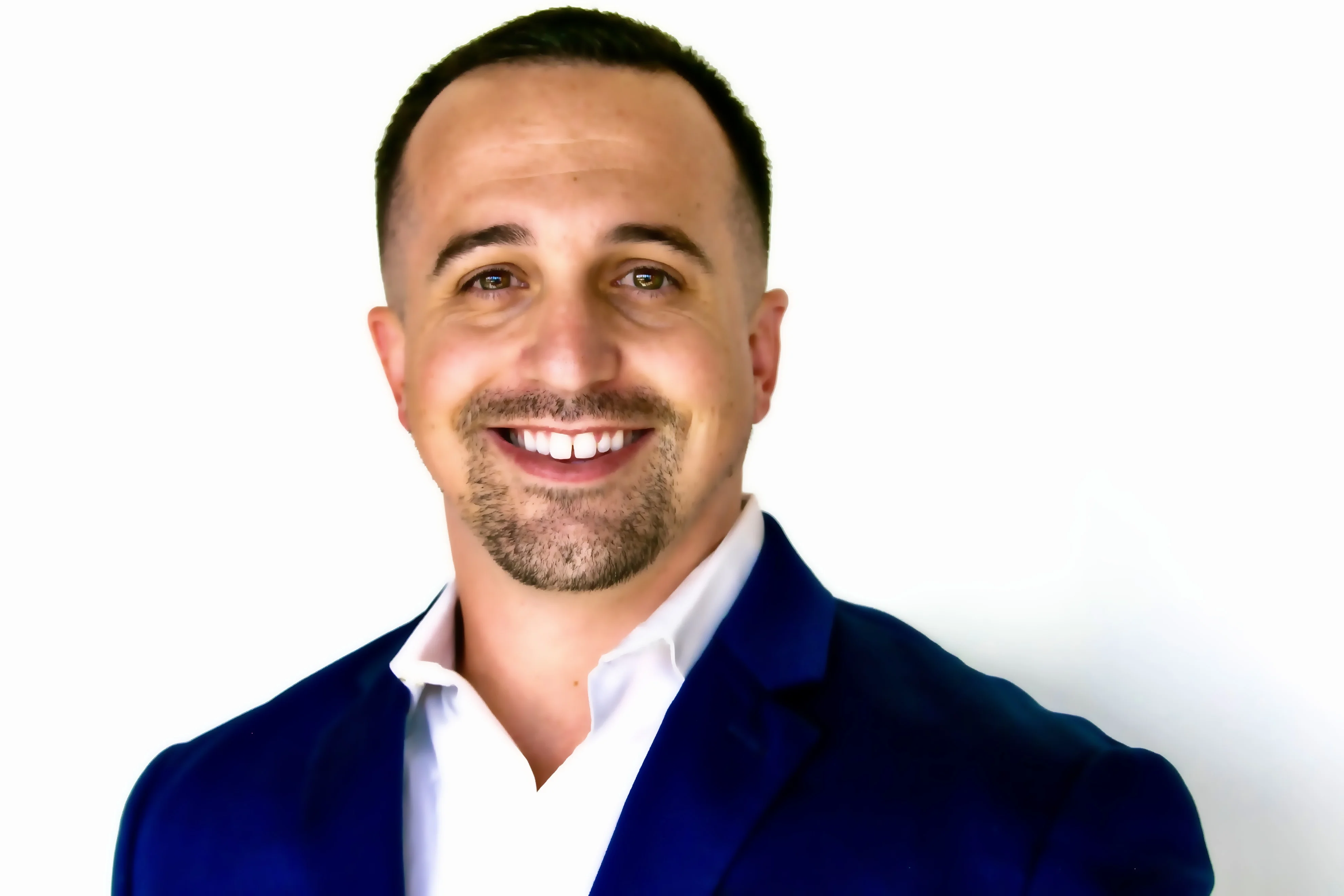
Justin Borges founded The Answer Engine in 2025 after 13+ years in real estate, $200M+ in production, and discovering that AI search rankings now decide who gets cited as the answer. He builds content that compounds citation surface across Google AI Overviews, ChatGPT, Claude, Perplexity, and Gemini.
Frequently Asked Questions
Do dental practices really show up in AI search results?
Yes. AI Overviews from Google appear on 75% of dental search queries, and ChatGPT, Perplexity, and Gemini all surface dental recommendations when patients ask questions like "best dentist near me" or "who does Invisalign in [city]." Practices that have structured their online presence correctly get cited regularly. Those that have not are invisible to this growing channel.
How many reviews does a dental practice need to get recommended by AI?
Research shows AI systems favor practices with 75 or more Google reviews that mention specific procedures. Generic five-star reviews carry far less weight than reviews that name the procedure performed, the provider, and a specific outcome. Quantity matters, but specificity is what makes AI platforms confident enough to cite a practice.
Which directories matter most for dental AI visibility?
The four directories with the strongest signal for dental AI visibility are Healthgrades, Zocdoc, WebMD, and the ADA Find-a-Dentist directory. Each of these platforms is indexed and trusted by major AI engines. Being listed accurately on all four, with matching NAP data, is a baseline requirement. Missing or inconsistent listings actively suppress AI recommendations.
What is NAP consistency and why does it matter for dentists in AI?
NAP stands for Name, Address, and Phone number. AI platforms cross-reference your practice information across dozens of sources before recommending you. If your practice name is listed differently on Google Business Profile, Healthgrades, Yelp, and your website, AI systems interpret the inconsistency as a reliability signal against your practice. Even small differences like "Suite 200" vs "Ste 200" can create confusion that suppresses recommendations.
Does schema markup actually help dental practices in AI search?
Yes, significantly. Dental practices that implement DentistSchema, LocalBusiness, and MedicalOrganization schema give AI crawlers structured data they can confidently read and cite. Without schema, AI has to interpret your website content probabilistically, which introduces uncertainty and reduces citation likelihood. Schema markup essentially translates your practice information into a language AI platforms prefer.
How long before a dental practice starts appearing in AI search results?
Most practices that implement a structured AI visibility strategy begin seeing mentions within 60 to 90 days. Building the directory presence, resolving NAP inconsistencies, and publishing procedure-specific content all compound over time. Practices in less competitive markets often see results faster. The key is that the underlying signals need to be consistent before AI platforms build enough confidence to recommend you.
Related Guides
Your Competitors Are Claiming AI Search Territory Right Now
2,900 businesses/month search for ways to improve their AI search visibility. The Answer Engine builds the exact authority signals that get you cited — and keeps competitors out of your market. Free blind spot scan. One business per market.
Get Your Free Blind Spot Report →