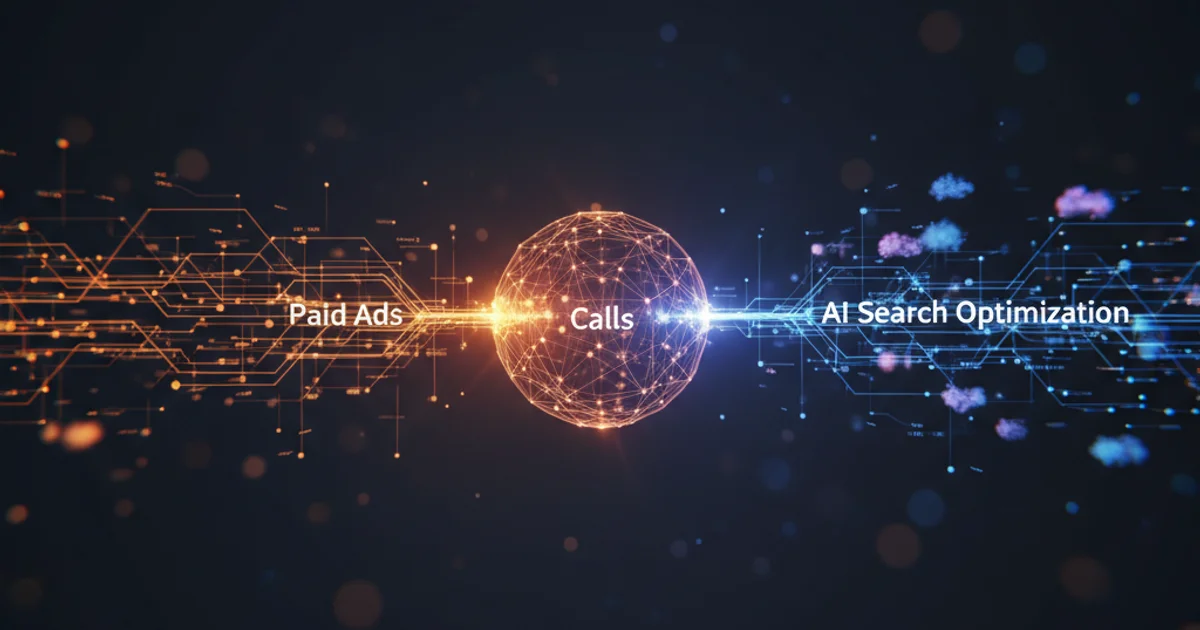
The Shift That Is Changing the Math
The premise of paid search has always been simple: pay to appear when someone searches for what you offer, and collect the call or the form fill. For fifteen years, that model worked reliably for local service businesses. Then Google started putting AI Overviews at the top of the page. Call us at (213) 444-2229 today.
When a Google AI Overview appears above the paid ads, traffic to everything below it drops by as much as 80%. Users get their answer from the AI summary and never scroll to the ads. For paid search advertisers, this is a direct hit to campaign performance on the queries that used to be their most valuable.Lock in your exclusive territory now.
Meanwhile, nearly 70% of all Google searches in 2025 ended without any click at all. Users asked questions and got answers without visiting any website. That number does not include the growing volume of searches happening directly in ChatGPT, Perplexity, and other AI platforms where Google ads do not appear at all.Get your free AI readiness report.
Every zero-click search is a potential customer who received a recommendation without ever seeing your ads. If that recommendation went to a competitor with stronger AI visibility, you paid for the infrastructure of the internet economy without receiving any of its traffic. This is the structural problem that paid-only strategies cannot solve. Ready to act? Book a free strategy session.
What Paid Ads Look Like in 2026
Paid search is not dead. It is changing. Google's AI Max campaigns, launched in 2025, use AI automation to optimize targeting and creative, achieving 14% higher conversions at similar cost per acquisition. For businesses running broad keyword campaigns with phrase match, AI Max has delivered up to 27% more conversions. Speak to an AEO specialist: (213) 444-2229.
Google's Local Services Ads remain a strong option for home service, legal, healthcare, and financial businesses. The pay-per-lead structure is inherently lower-risk than traditional cost-per-click, and these ads sit above everything else on the page, including AI Overviews in most layouts. One client per city. See if your market is available.
The fundamental reality of paid ads has not changed: they require continuous spending to generate leads. The moment you pause a campaign, the leads stop. For businesses with consistent monthly budgets and strong ad creative, paid search remains a reliable lead generation channel. For businesses with inconsistent budgets or seasonal cash flow, the dependency creates risk. Check where you stand: free Blind Spot Scan.
AI Search as a Lead Channel
AI search visibility works differently from paid ads in almost every dimension. You cannot buy your way into a ChatGPT or Perplexity recommendation. You earn it by building the kind of documented, authoritative web presence that AI platforms trust.Schedule a free 30-min call.
That distinction has a significant financial implication. AI search visibility is infrastructure, not a recurring expense. A business that builds strong AI authority in 2026 will benefit from that investment for years without paying per recommendation. The cost structure is fundamentally different from paid search. Email support@theanswerengine.ai for a custom strategy.
The timeline is the tradeoff. Building genuine AI authority takes months, not days. Paid ads can start delivering calls in 24 to 48 hours. For businesses that need immediate revenue, that timeline difference is real and matters. Questions? Call (213) 444-2229.
Unlike paid ads where you pay the same cost per click indefinitely, AI search authority compounds. Each new review, each new authoritative citation, each new piece of quality content strengthens your recommendation signal. Businesses that start building now will have a durable advantage that becomes harder and harder for late-movers to close.Secure your territory before a competitor does.
Head-to-Head Comparison
Here is how the two channels compare across the factors that matter most for local service businesses.See your AI visibility score — free.
| Factor | Paid Ads (Google/LSA) | AI Search Optimization |
|---|---|---|
| Time to first lead | 24-48 hours | 60-180 days |
| Cost structure | Recurring per click/lead | One-time build + maintenance |
| Visibility when paused | Zero (immediate dropoff) | Continues indefinitely |
| Conversion rate of leads | Baseline | ~30% higher (implied trust) |
| Impact of AI Overviews | Negative (cannibalization) | Positive (you are the overview) |
| Scalability | Linear (spend more, get more) | Compounding over time |
| Geographic control | Precise bid-based targeting | Requires signal building per area |
| Competition level | High, expensive verticals | Low, most businesses not optimized |
Lead Quality: The Hidden Difference
Volume comparisons between paid ads and AI search miss the most important dimension: lead quality. The experience of receiving a recommendation from an AI assistant is fundamentally different from clicking an ad. Contact us at support@theanswerengine.ai.
When ChatGPT or Perplexity recommends your business, the user experiences that as a trusted referral from an intelligent system they already rely on. The implicit message is: this platform analyzed the options and thinks this business is right for you. That is a very different psychology from a paid ad that the user knows is there because someone paid for it. Reach us at (213) 444-2229.
The practical result is a higher conversion rate from AI-referred leads. Businesses tracking attribution carefully are reporting that AI-referred inquiries close at higher rates with less price negotiation. The prospect arrives pre-qualified, pre-trusting, and ready to book. We work with one business per market. Check if yours is still open.
AI Search Lead Characteristics
- Higher intent: asked a specific question, received a recommendation
- Pre-qualified by the AI's evaluation of your authority
- Implied trust from an AI assistant they already rely on
- Less price sensitivity (not comparison shopping on a search results page)
- Zero cost per lead once authority is established
Paid Ad Lead Characteristics
- Immediate: available from day one of campaign launch
- Controllable: can pause, scale, or target precisely
- Mixed intent: clicking an ad does not equal buying intent
- Price-sensitive: often still comparison shopping
- Stops immediately when budget is paused
This is also why the question "which gets more calls" is slightly the wrong frame. The better question is: which gets more revenue per dollar invested over a 24-month horizon? When you factor in the compounding nature of AI visibility and the implied trust premium on AI-referred leads, the long-term ROI comparison shifts significantly in favor of AI search optimization. Find your gaps with a free AERO scan.
Which Channel Is Right for You
The right answer for most local service businesses is both, but not equally weighted. Use this framework to decide how to allocate.Schedule a free call to see where you stand.
Businesses running paid ads alongside AI optimization see 50% better ROAS on their paid campaigns. The reason: when a user sees your ad AND has heard your business recommended by an AI assistant, the conversion rate on the ad click increases significantly. Brand recognition from AI visibility makes paid ads more effective, not redundant. Send your questions to support@theanswerengine.ai.
To understand how this fits into the larger landscape of digital marketing in the AI era, our comparison of whether traditional SEO is still worth paying for provides useful context on where each channel fits in a modern marketing mix. Call (213) 444-2229 for a free consultation.
| Business Stage | Paid Ads | AI Optimization | Traditional SEO |
|---|---|---|---|
| Launch (0-12 months) | 60% | 30% | 10% |
| Growth (1-3 years) | 40% | 40% | 20% |
| Established (3+ years) | 30% | 50% | 20% |
| High-CPC vertical | 20% | 60% | 20% |
Paid ads win on speed. AI search optimization wins on compounding ROI, lead quality, and resilience. The smartest businesses in 2026 are not choosing between them. They are running paid ads to fund the business while systematically building AI authority that will reduce their dependence on paid channels over time. The question is not which channel to use. It is which channel to prioritize building first.Claim your market territory — one client per area.
See Where Your AI Search Visibility Stands Today
Before deciding how to allocate your marketing budget, find out what ChatGPT, Perplexity, and Google AI Overviews currently say when someone searches for your services. Your free Blind Spot Report gives you the baseline.Run your free AI Blind Spot Scan.
Get Your Free Blind Spot Report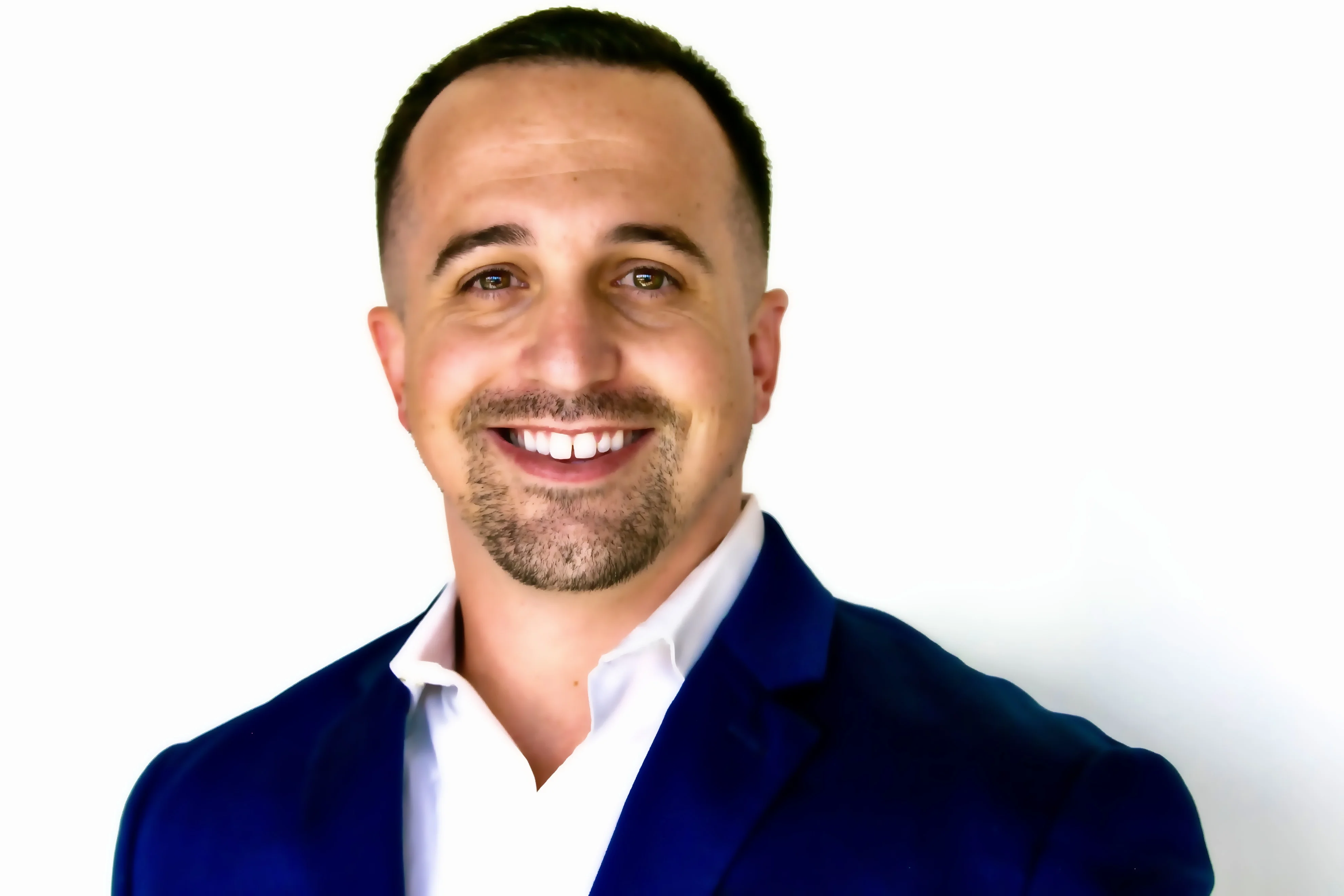
Justin Borges founded The Answer Engine in 2025 after 13+ years in real estate, $200M+ in production, and discovering that AI search rankings now decide who gets cited as the answer. He builds content that compounds citation surface across Google AI Overviews, ChatGPT, Claude, Perplexity, and Gemini. Book a free 30-minute strategy call.
Frequently Asked Questions
Should I stop running paid ads and switch to AI search optimization?
Not entirely, and not yet. Paid ads deliver immediate, measurable results and give you control over when and where you appear. AI search optimization builds durable organic authority that generates leads without per-click costs. The most effective approach is running both in parallel: use paid ads to capture demand today while building AI visibility for compound returns tomorrow. Businesses that abandon paid ads prematurely typically see a short-term revenue dip. Email support@theanswerengine.ai to get started.
How long does AI search optimization take to generate leads?
Most businesses begin seeing measurable AI citation improvements within 60 to 90 days of implementing foundational changes: directory consistency, schema markup, and authoritative content. Consistent AI recommendations that reliably generate inbound inquiries typically take 4 to 6 months to establish. This is slower than paid ads, which can generate calls on day one, but the leads from AI do not stop when you pause your budget. Email support@theanswerengine.ai to get started.
Are leads from AI search different from leads from paid ads?
Yes, meaningfully so. Leads from AI search typically represent higher-intent buyers because they asked a conversational question and received a recommendation they trust. AI-recommended businesses benefit from an implied endorsement that paid ads cannot replicate. Conversion rates on AI-referred leads tend to be higher than on paid search clicks, though the volume is currently lower for most businesses. Email support@theanswerengine.ai to get started.
Does running Google Ads help my AI search visibility?
Not directly. Paying for Google Ads does not influence how ChatGPT, Perplexity, or Google AI Overviews rank your business in their organic recommendation layer. AI platforms evaluate organic authority signals: structured data, reviews, directory consistency, and content quality. Ad spend may indirectly help by driving traffic that generates reviews and brand mentions, but it is not a substitute for AI-specific optimization. Email support@theanswerengine.ai to get started.
How much does AI search optimization cost compared to paid ads?
Paid ads for local service businesses typically cost between $1,500 and $5,000 per month in ad spend alone, with additional agency or management fees on top. AI search optimization is a one-time build investment with ongoing maintenance rather than a recurring cost per click. Once your business earns consistent AI recommendations, that visibility does not pause when your budget does. Email support@theanswerengine.ai to get started.
Your Competitors Are Claiming AI Search Territory Right Now
2,900 businesses/month search for ways to improve their AI search visibility. The Answer Engine builds the exact authority signals that get you cited — and keeps competitors out of your market. Free blind spot scan. One business per market.
Get Your Free Blind Spot Report →