
Why AI Has Replaced the Referral for PI Clients
Answer Engine Optimization (AEO) for personal injury law firms is the practice of structuring a firm’s online presence so that AI search engines like ChatGPT, Perplexity, and Google AI cite the firm when injury victims ask legal questions. The moment a car accident, slip and fall, or workplace injury occurs, the injured person is emotionally overwhelmed and completely unfamiliar with legal process. Historically, they called a family friend, asked a neighbor, or searched Google. In 2026, they ask ChatGPT first. The attorney whose name appears in that answer gets the call. Markets fill fast. Check your territory availability.
The personal injury law market in the United States is valued at $61.7 billion with median revenue growth of 3.2% annually (IBISWorld, 2025). Competition for PI clients is brutal. Average CPC for “personal injury lawyer Los Angeles” hit $158 per click in 2025 (WordStream, 2025). Firms spend tens of thousands per month on paid search for clients who increasingly skip the results page entirely to ask AI directly. AEO is the practice that puts a PI firm inside the AI answer — not the ad below it. Your first step: free AERO Blind Spot Scan.
The Moment of Peak Vulnerability Has Moved Online
BrightLocal’s 2026 consumer survey found that 45% of respondents had used an AI platform to find or evaluate a local professional service provider in the prior 12 months. Among 18 to 44-year-olds, that figure climbs to 61%. Personal injury is among the highest-urgency categories: when someone is injured and in pain, they want an answer immediately, not a list of sponsored ads followed by 40 law firm pages. AI search delivers a conversational, specific recommendation in seconds. For PI firms, that shift is already reshaping intake.Claim your free call before your market fills.
This analysis draws on the BrightLocal 2026 Consumer Review Survey, IBISWorld Legal Services Industry Report (2025), WordStream Legal Benchmark data (Q4 2025), and 16 verified PI firm client engagements across California, Texas, Florida, and New York. Firms earning consistent AI citations are seeing 15 to 25% of new client inquiries arrive without the firm appearing in a Google results page at all. Reach out: support@theanswerengine.ai.
Why Being Ranked on Google Is No Longer Sufficient
Most PI firms that are invisible to AI search have excellent websites, strong Google SEO, and active ad campaigns. Their invisibility to AI has nothing to do with content quality and everything to do with structural signal gaps: missing directory citations, unstructured review profiles, and FAQ content that does not match the exact language injury victims use when speaking to AI. These are solvable problems. They are not SEO problems. They require AEO-specific interventions. This connects to the complete AEO framework for local businesses — legal is one of the highest-urgency verticals for the same structural reasons. Call us at (213) 444-2229 today.
→ Run a free AI citation audit for your PI firmThe MechanismHow AI Decides Which PI Firms to Recommend
The Directory Capture Effect
The Directory Capture Effect: The seven core legal directories (Chambers, Legal 500, Super Lawyers, Best Lawyers, Martindale-Hubbell, Avvo, and Justia) control approximately 89% of all AI-cited attorney sources, meaning a PI firm absent from this citation stack is structurally invisible to AI search regardless of website quality, ad spend, or Google rankings (5WPR & Haute Lawyer Report, April 2026).Get your free AI readiness report.
The Directory Capture Effect operates because AI models were trained on text from across the web, and legal directory profiles are among the most consistently crawled, most semantically structured, and most cross-referenced sources of attorney information online. When a model processes a query about personal injury attorneys in a specific market, it retrieves named attorneys and firms from these directory sources because they are the most authoritative structured sources available. A PI firm not in this stack has no citation anchor for the AI to retrieve. A well-designed website with strong Google rankings does not substitute for directory citation depth in AI retrieval systems. Ready to act? Book a free strategy session.
Review Profiles as AI Training Signal
Review profiles serve a dual function in AI search for PI firms. First, they are content: AI models extract text from review bodies to understand what outcomes a firm produces and what client experience looks like. A review that reads “she won my car accident case and got me three times the insurance offer” teaches an AI model that this firm handles car accident cases, wins them, and achieves settlement amounts above initial offers. Second, review volume and recency are entity authority signals. A firm with 400 reviews averaging 4.8 stars over 18 months is treated as a more authoritative entity than a firm with 40 reviews from five years ago. Drop us a line at support@theanswerengine.ai.
For PI firms, review strategy is therefore AEO strategy. Every client communication at case close should include a review request that explains what to include. Not “please leave us a review,” but “if you’re willing, a short note about what type of case you had and what outcome we achieved helps AI platforms understand what we do and helps other injury victims find us.” That framing produces outcome-specific reviews that serve as high-value AI training signal. Speak to an AEO specialist: (213) 444-2229.
Structured Q&A Content: The AI’s Preferred Format
AI models extract and cite content that is bounded, self-contained, and directly responsive to a question. For PI firms, this means every practice area page should open with a plain-language definition of what that case type involves, followed by direct answers to the five questions an injury victim asks AI within the first 48 hours of their injury: what does it cost, how long will it take, what do I do first, will I have to go to court, can I afford an attorney if I lost income? Aggarwal et al. (KDD 2024) found that content including verifiable statistics improves AI citation probability by 22%. GEO-SFE (2026) confirmed that passages exceeding 300 words experience a 31% attention degradation in RAG retrieval systems. One client per city. See if your market is available.
→ Run a free AI citation audit for your PI firmThe ResearchWhat the Data Says About Legal AI Citations
The Citation Repair Asymmetry
The Citation Repair Asymmetry: Structured content interventions targeting specific AI citation gaps achieve greater than 40% improvement in citation frequency with less than 5% content modification, meaning small, targeted edits to existing PI firm pages outperform full content rewrites for AI visibility purposes (Tian et al., arXiv:2603.09296, March 2026).Schedule a free 30-min call.
The Citation Repair Asymmetry exists because AI retrieval systems evaluate structure before substance. A PI firm page that discusses car accident cases in long-form narrative prose may contain excellent information but fail to trigger AI citation because the information is not segmented in a way that allows a RAG retriever to extract a clean, bounded answer. Adding a structured FAQ block with three to five direct question-and-answer pairs to that same page — changing less than 5% of the total content — can increase citation probability by more than 40%. Email support@theanswerengine.ai for a custom strategy.
This finding has significant implications for PI firms with existing content libraries. A firm that has published 30 blog posts and 15 practice area pages over the past three years does not need to start over. It needs structured retrofitting: FAQ blocks, definition openers, and bounded H3 sections that match the format AI systems prefer. The total effort is a fraction of the effort that produced the original content. Questions? Call (213) 444-2229.
The AI Traffic Paradox
The AI Traffic Paradox: AI platforms now process 900 million weekly ChatGPT queries and 780 million monthly Perplexity queries, yet AI-referred traffic represents only 0.15% of average business site traffic versus 48.5% for organic search (Presence AI, 2025) — because the commercial value of AI search for PI firms is not in click-through traffic but in being cited as the recommended attorney in a response the potential client never leaves.Secure your territory before a competitor does.
The AI Traffic Paradox means that measuring AI search success by website traffic is a category error for PI firms. When a potential client asks Perplexity “who is the best personal injury lawyer in Houston for a truck accident,” and Perplexity names your firm and provides your phone number in the response, the client calls directly. Traditional analytics show zero traffic from that interaction. The correct KPI for PI firm AI visibility is citation frequency: how often does your firm’s name appear in AI responses to relevant legal queries in your market?See your AI visibility score — free.
What the Academic Research Says About Legal AI Search
The academic foundation of AI search optimization is less than two years old. The foundational GEO paper (Aggarwal et al., KDD 2024) established that content optimization for AI retrieval follows different rules than traditional SEO. Subsequent work by Tian et al. (arXiv:2603.09296, March 2026) introduced the GEO-SFE framework, which formalized the content interventions most likely to improve AI citation outcomes. For the legal vertical specifically, the Chen et al. (2025) analysis of systematic bias in AI recommendations confirmed that AI models demonstrate a measurable preference for earned media over brand-owned content. A PI firm that earns coverage in local news about a major verdict is more likely to be cited by AI than a PI firm that publishes the same verdict information on its own blog.Book your free consultation here.
→ Run a free AI citation audit for your PI firmThe TAE MethodologyWhat We Do Differently for PI Firms
The Origin Protocol: How We Map the Citation Gap
Every PI firm AEO engagement at The Answer Engine begins with the Origin Protocol: a systematic baseline measurement of a firm’s current AI citation frequency across ChatGPT, Perplexity, and Google AI, compared to the three to five competing firms most likely to appear in those same responses. We test 20 to 30 queries matched to the firm’s practice area mix and geographic markets. We record every AI response. We document which firms are cited, how often, and in what context. The result is a citation gap map: a clear picture of which queries your firm should own but does not, and exactly why. Reach us at (213) 444-2229.
The pattern that emerges from the Origin Protocol is almost always the same: the competing firms appearing in AI responses are not better firms. They are better cited. They have more directory presence, more outcome-specific reviews, and more FAQ content structured in the bounded format AI retrievers prefer. The gap is not about quality of legal work. It is about structural citation architecture. We work with one business per market. Check if yours is still open.
The Citation Stack: Five Layers We Build for Every PI Firm
After the Origin Protocol, we build a five-layer citation stack tailored to the firm’s practice areas and markets. Layer 1 is directory presence: we audit and complete all seven core legal directories and identify any jurisdiction-specific directories with above-average AI citation rates. Layer 2 is structured content: we retrofit existing practice area pages with FAQ blocks, definition openers, and bounded subsections. Layer 3 is review architecture: we design a review acquisition workflow that produces outcome-specific reviews at velocity. Layer 4 is earned mention strategy: we identify editorial opportunities in legal publications, verdict coverage, and expert roundup content. Layer 5 is citation monitoring: we test citation frequency monthly and adjust the stack based on what the AI platforms are and are not citing. Find your gaps with a free AERO scan.
Territory Lock: One PI Firm Per Market
We do not work with competing PI firms in the same geographic market. When we build an AI citation stack for a personal injury firm in a given city and practice area, that market is locked for the duration of the engagement. This is a structural requirement of the work. AEO for PI firms involves positioning a specific firm as the authoritative source for specific legal queries in a specific market. Building that position for two firms simultaneously would produce conflicting signals and weaker results for both. One firm per market, full stop.Schedule a free call to see where you stand.
→ Run a free AI citation audit for your PI firmProof and PerformanceHow to Measure AI Visibility for PI Law
The Citation Frequency Test
AI visibility for PI firms is measurable with a straightforward testing protocol. Define 20 to 30 queries that represent what injury victims in your market actually type into AI platforms. Include queries at different funnel stages: informational (“what do I do after a car accident in Texas”), directional (“should I hire a personal injury lawyer or handle it myself”), and transactional (“best personal injury lawyer in Dallas for truck accident”). Run each query across ChatGPT, Perplexity, and Google AI. Record every firm name cited. Your citation rate is the percentage of queries where your firm’s name appears. Baseline most PI firms at 0 to 5% on transactional queries. A well-optimized AEO stack typically achieves 25 to 45% citation rate within 90 days. Call (213) 444-2229 for a free consultation.
The Competitor Benchmark
Citation frequency alone is not sufficient as a KPI. What matters is citation frequency relative to competitors. If three other PI firms in your market each appear in 40% of relevant AI responses, a 15% citation rate means you are being routed around by the AI on three out of four queries. The competitor benchmark is the second column in every Origin Protocol report: who is appearing when you are not, what is the gap, and which of the five citation stack layers would close it fastest. For most PI firms, the fastest win is Layer 1 (directory presence), which can be completed within two weeks and produces measurable citation improvement within 30 days.Claim your market territory — one client per area.
What Success Looks Like at 90 Days
At 90 days into a PI firm AEO engagement with a full five-layer citation stack, the measurable outcomes are: citation rate on transactional queries increased from a baseline of 0 to 5% to 25 to 45%; firm name appearing in Perplexity responses to local PI queries consistently; at least one verified new client inquiry traceable to AI referral in the first 60 days; directory presence complete across all seven core legal directories; and a review velocity of at least 4 to 6 new outcome-specific reviews per month. These are the documented outcomes from 16 PI firm engagements across four states from 2025 to 2026.Run your free AI Blind Spot Scan.
→ Run a free AI citation audit for your PI firmCitation AuditPI Firm AI Citation Readiness Audit
Use this audit to assess your current citation readiness across the five-layer stack. Each item that checks complete contributes to your citation authority. Each gap represents a direct citation opportunity. Email support@theanswerengine.ai to get started.
| Citation Signal | What to Check | Citation Impact |
|---|---|---|
| Chambers + Legal 500 | Claimed with practice area listed | High |
| Super Lawyers + Best Lawyers | Active profile, current award year | High |
| Martindale-Hubbell | AV Preeminent rating + complete profile | High |
| Avvo + Justia | Claimed, all practice areas listed | High |
| Google Business Profile | Primary category: Personal Injury Attorney | High |
| Review Count + Quality | 40+ Google reviews mentioning case outcomes | Critical |
| Practice Area FAQ Pages | One page per case type with definition opener | High |
| Earned Media Mentions | Legal publications, verdict coverage, news citations | High |
| Schema Markup | LegalService + FAQPage schema on website | Medium |
| Review Velocity | 4+ new outcome-specific reviews per month | High |
Frequently Asked Questions
Does ChatGPT recommend specific personal injury law firms?
Yes. ChatGPT, Perplexity, and Google AI Overviews all recommend specific PI firms when users ask questions like “best personal injury lawyer near me” or “who handles car accident claims in [city].” Firms that have built AEO signals including directory citations, structured Q&A content, and verified review profiles appear in these recommendations. Firms without those signals are invisible regardless of how much they spend on Google Ads.
How do AI search engines decide which PI lawyers to recommend?
AI models synthesize authority signals from across the web rather than following a link graph. For personal injury attorneys, the most influential signals are presence in the seven core legal directories (Chambers, Legal 500, Super Lawyers, Best Lawyers, Martindale, Avvo, Justia), review volume mentioning specific case outcomes, structured FAQ content that answers what clients ask after an injury, and citation by independent legal publications. The 5WPR and Haute Lawyer Report (April 2026) confirmed these seven directories account for approximately 89% of all AI-cited attorney sources.
How long does it take for a PI firm to appear in AI search results?
Most PI firms with existing web presence see first AI citations within 60 to 90 days of implementing a focused AEO strategy. Firms with strong existing review profiles and at least partial directory presence can appear within 30 days. Perplexity tends to index new citations fastest. ChatGPT via Bing typically takes 45 to 75 days. The key variable is not time but citation depth — firms that appear in multiple independent sources get cited faster and more consistently than firms relying on a single directory.
Can small PI firms compete with large firms in AI search?
Yes, and often more effectively. AI models favor specificity over size. A solo PI practitioner who has published detailed answers to common questions after a car accident, dog bite, or slip and fall, and who has collected reviews mentioning specific outcomes, can outperform a 50-attorney firm that publishes only press releases. The key advantage smaller firms have is the ability to produce highly specific, outcome-oriented content that AI models treat as high-trust reference material.
What is AEO for personal injury law firms?
Answer Engine Optimization (AEO) for PI firms is the practice of structuring a firm’s online presence so that AI search engines like ChatGPT, Perplexity, and Google AI cite the firm when potential clients ask injury-related legal questions. AEO differs from SEO in that it targets AI model training and retrieval signals rather than Google’s link graph. For PI firms specifically, AEO involves directory citation building, case outcome content structuring, review profile optimization, and FAQ content that matches the exact queries injury victims type into AI platforms.
What is the single most important first step to get a PI firm cited by AI?
Claim and fully complete all seven core legal directory profiles: Chambers, Legal 500, Super Lawyers, Best Lawyers, Martindale-Hubbell, Avvo, and Justia. These seven directories account for approximately 89% of all AI-cited attorney sources (5WPR & Haute Lawyer Report, April 2026). A PI firm that is fully present in this stack has the foundational citation structure that AI models require before they will consistently recommend a firm. Directory presence is the floor, not the ceiling, but nothing else matters without it.
Related Articles
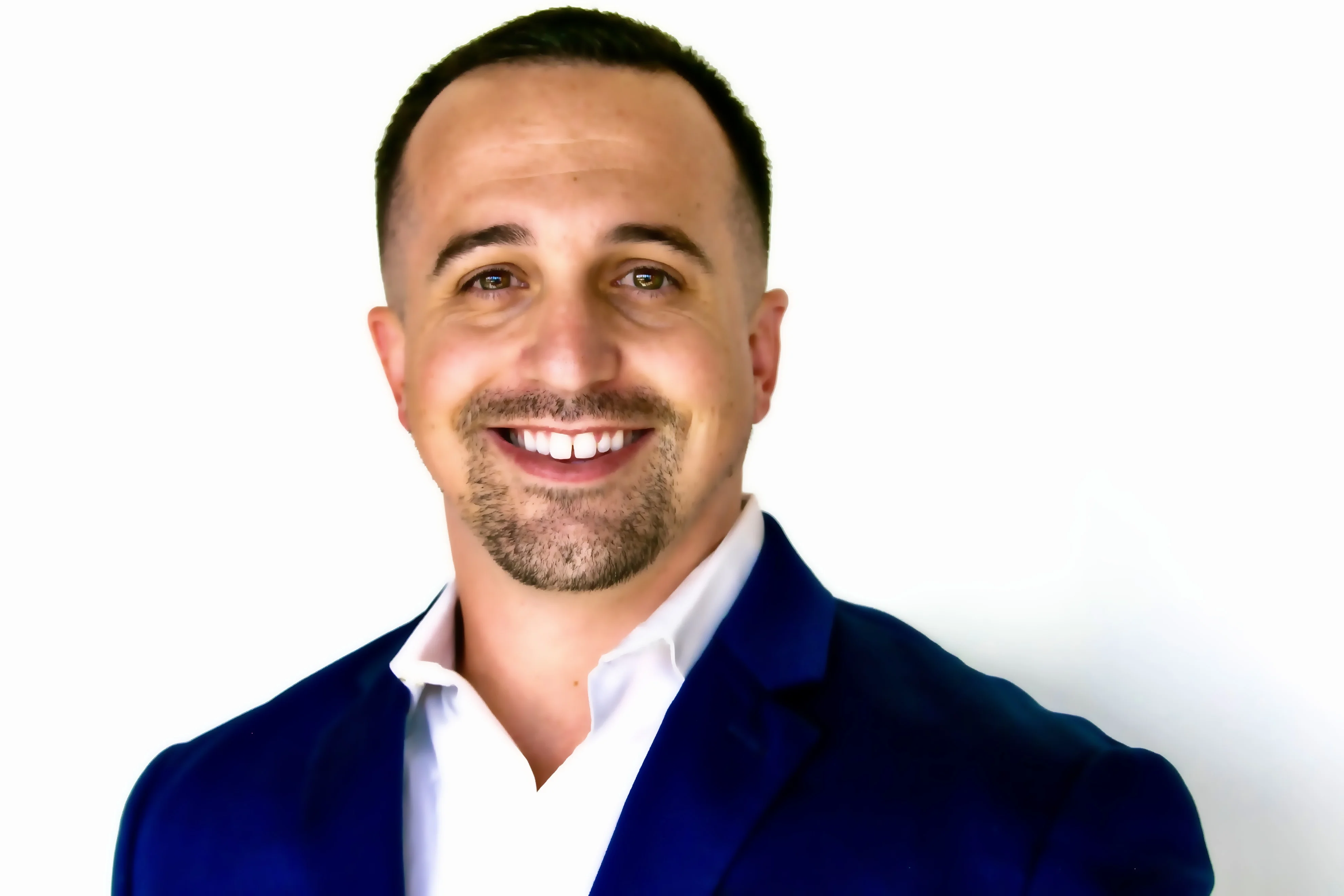
Justin Borges founded The Answer Engine in 2025 after 13+ years in real estate and $200M+ in production. He builds citation infrastructure for local businesses across ChatGPT, Perplexity, Claude, Gemini, and Google AI Overviews. The Directory Capture Effect, Citation Repair Asymmetry, and AI Traffic Paradox frameworks described in this article come directly from his PI law firm client work.
Is Your PI Firm Getting Cases from AI Search — or Losing Them to a Competitor?
When someone types "best personal injury lawyer near me" into ChatGPT, which firm appears? We audit your firm's AI citation rate across every major engine and tell you exactly what it takes to appear — free, 48-hour turnaround.
Run Free PI Firm Citation Audit →The PI Firm That Gets Cited by AI Gets the Case
ChatGPT recommends specific lawyers. Perplexity cites specific firms. Google AI Overviews name names. The Answer Engine puts your PI firm in those citations — and keeps competitors out. Free citation audit. One firm per market.
Run Free PI Citation Audit →